
Vorkommen in der Schweiz
Einheimisch (INN)
ⓘⓧ
Gefährdungsgrad
Gemäss den Kategorien und Kriterien der Roten Liste der IUCN oder gemäss Duelli et al. 1994.
(exp = Einschätzung von Expert*innen)
Schutzstatus (CH)
Gemäss den entsprechenden nationalen Gesetzen und Verordnungen.
Gefährdungsgrad (CH)
Nicht bedroht (LC)
Schutzstatus (CH)
ⓘⓧ
Gemäss den aufgeführten Gesetzen und Verordnungen
–
Gesetze und Verordnungen
–
ⓘⓧ
Gemäss der Vollzugshilfe: Liste der national prioritären Arten der Schweiz.
Nationale Priorität
–
Handlungsebene
–
Hinweis zur Handlungsebene
–
Dringlichkeit (CH)
–
Sicherung Einzelvorkommen
–
Bestandsüberwachung
–
ⓘⓧ
Landwirtschaft (OEA/UZL)
Zielart/Leitart gemäss: Umweltziele Landwirtschaft „Arten und Lebensräume“.
(* = Einschätzung von Expert*innen)
Wälder
2: Waldzielart gemäss: Biodiversität und Wald: Ziele und Massnahmen. Vollzugshilfe zur Erhaltung und Förderung der biologischen Vielfalt im Schweizer Wald (Imesch et al. 2015).
1: Ergänzende Zielart im Wald, definiert im Rahmen von BAFU-Aktionsplänen (z. B. Aktionsplan Lichte Wälder).
Landwirtschaft (UZL)
–
Wald
–
✓
Taxon gut untersucht, Karte nahe an der tatsächlichen Verbreitung Mehr Info
Karte
Karte der Beobachtungen von Colletes cunicularius in der Schweiz (Auflösung 5 x 5 km).Karte anschauen
Zeitraum
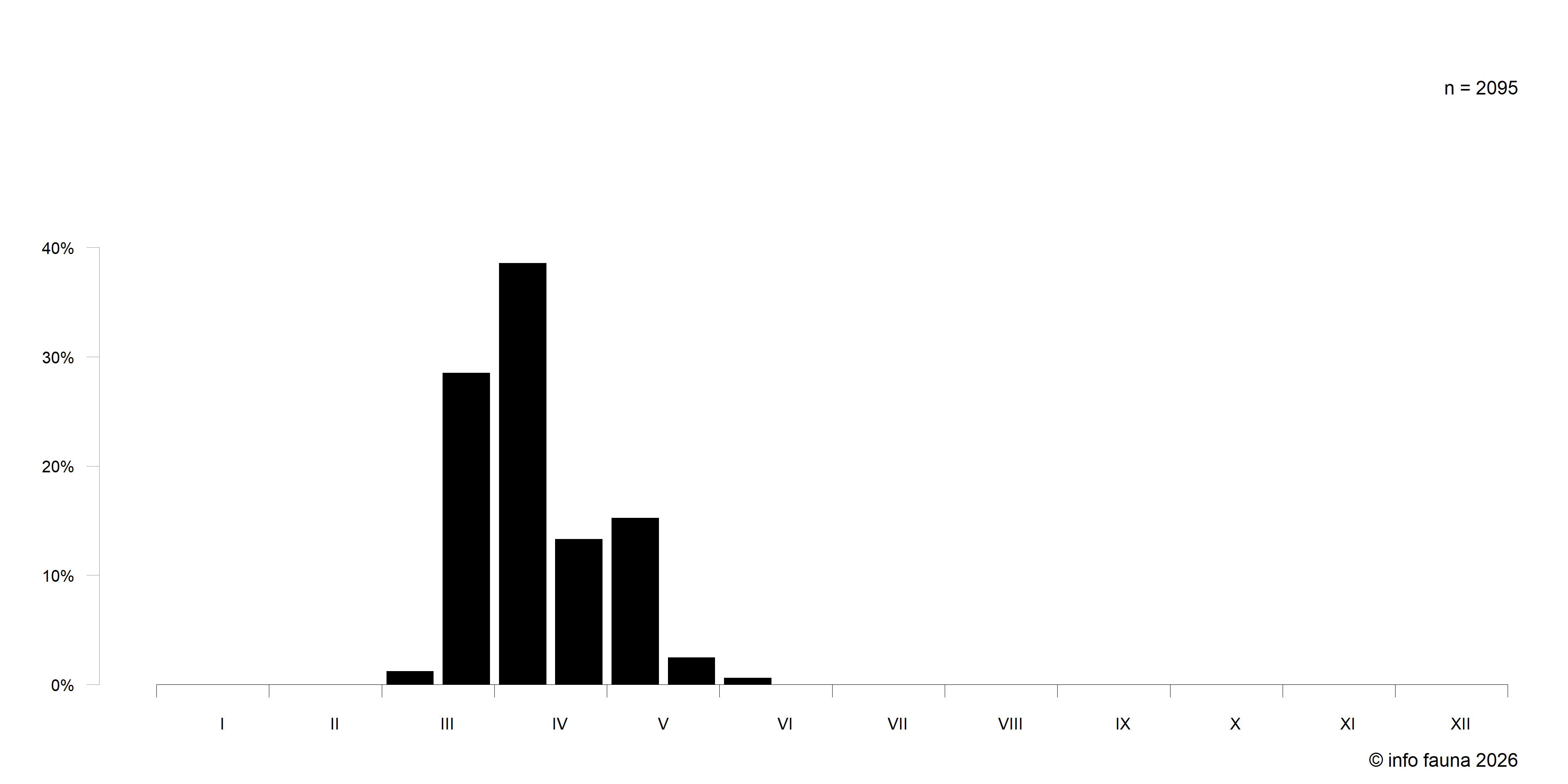
Zeitraum der Beobachtungen von Colletes cunicularius in der Schweiz. Die Grafik zeigt den Anteil aller Beobachtungen pro zwei Wochen.
Klassifikation
- Arthropoda (Phylum)
- Insecta (Klasse)
- Hymenoptera (Ordnung)
- Apidae, Colletinae (Familie)
- Colletes (Gattung)
- Apidae, Colletinae (Familie)
- Hymenoptera (Ordnung)
- Insecta (Klasse)
Weitere Informationen
Artporträt
Autor-inn-en
Andreas Müller
Porträt
Feldkennzeichen
Die 13-14 mm langen Weibchen von Colletes cunicularius besitzen im Vergleich zu den anderen einheimischen Colletes-Arten keine deutlichen hellen Haarbinden an den Endrändern der Tergite. Sie sehen der Honigbiene und gewissen Andrena-Arten sehr ähnlich, unterscheiden sich aber bei Untersuchung von Hand durch die auffällig kurze, zweilappige Zunge und den starken zitronenartigen Duft, der bei Gefahr abgesondert wird.

Frühlingsart C. cunicularius mit dichter, dunkler Behaarung. Foto © Dimitri Bénon.
Dieser zitronenartige Duft ist auch typisch für die 12-14 mm langen Männchen, die den Weibchen äusserlich recht ähnlich sehen.

Männchen auf Salix (Buttes NE, Ende März 2017). Photo © Dimitri Bénon.
Biologie und Lebensraum
Lebensraum
Colletes cunicularius gilt als eine typische Art der Flussauen. Die Art besiedelt aber auch andere Lebensräume, die durch grössere Bestände von Salix, Acer oder baumförmigen Rosaceae sowie leicht grabbare und vor allem sandige Böden ausgezeichnet sind, wie zum Beispiel Sand- und Kiesgruben, Hochwasser- und Bahndämme, strukturreiche Feldfluren und gelegentlich auch Siedlungsgebiete.
Nahrungspflanzen
C. cunicularius ist polylektisch, sammelt den Pollen in Mitteleuropa aber bevorzugt auf Salix (Salicaceae) sowie anderen Sträuchern und Bäumen, wie z.B. Acer (Sapindaceae), Malus, Prunus, Pyrus und Sorbus (Rosaceae), Ilex (Aquifoliaceae), Sambucus (Adoxaceae), Quercus (Fagaceae) oder Euonymus (Celastraceae), nur ausnahmsweise auch auf krautigen Pflanzen, wie zum Beispiel Taraxacum (Asteraceae) oder Ranunculus (Ranunculaceae). Ausserhalb Mitteleuropas wurden auch Vertreter der Anacardiaceae, Brassicaceae, Cistaceae, Ericacae, Fabaceae, Grossulariaceae, Resedaceae und Rhamnaceae als Pollenquellen nachgewiesen. Pro Tag werden bis zu sieben Pollensammelflüge durchgeführt. Für die Verproviantierung einer Brutzelle mit Salix-Pollen sind 7-9 Pollenladungen notwendig. (Bischoff et al. 2003, Müller & Kuhlmann 2008, Peeters et al. 2012, Else & Edwards 2018, Westrich 2018).

Colletes cunicularius sammelt bevorzugt den Pollen auf Salix sp. (Hüntwangen ZH, 1997). Photo © Albert Krebs.
Nistbiologie
C. cunicularius nistet in selbst gegrabenen Gängen an meist vegetationslosen oder nur schütter bewachsenen Bodenstellen, meist in ebener bis schwach geneigter Lage, seltener in vertikalen Abbruchkanten. Sandige Böden werden stark bevorzugt und auch dann besiedelt, wenn sie durch eine mehr oder weniger dicke Humusschicht überdeckt sind. C. cunicularius legt die Nester meist in kleinen bis grossen Aggregationen an, die bis zu mehrere tausend Nester umfassen und eine Dichte von bis zu 30 Nestern pro Quadratmeter erreichen können. Die Nester bestehen aus einem 8-10 mm breiten und durchschnittlich knapp 30 cm bis maximal 80 cm langen Hauptgang, der vorerst auf einer Länge von wenigen Zentimetern schräg ins Erdreich verläuft, bevor er senkrecht in die Tiefe führt. Am Ende des Hauptganges wird ein mehr oder weniger horizontaler, 2-6 cm langer Seitengang gegraben, an dessen Ende eine Brutzelle angelegt wird. Nach Verschluss der ersten Brutzelle wird oberhalb des ersten Seitenganges ein zweiter Seitengang gegraben, der wiederum mit einer Brutzelle endet. Mit der dabei anfallenden Erde wird der erste Seitengang verschlossen, bevor in der gleichen Art und Weise weitere Brutzellen gebaut und verproviantiert werden. Ein Nest enthält bis zu acht Brutzellen, welche alle am Ende von horizontalen oder schräg abwärts führenden Seitengängen liegen, die in unterschiedlicher Richtung und in meist geringer Distanz übereinander vom Hauptgang abzweigen und nach der Fertigstellung der Brutzelle mit Erde gefüllt werden. Für den Verschluss des letzten Seitenganges sowie des untersten Bereiches des Hauptganges wird die Erde verwendet, welche sich zu Beginn des Nestbaus vulkanartig um den Nesteingang anhäufte. Der grösste Teil des Hauptganges wird dagegen nicht verfüllt. Die Brutzellen werden mit einer sehr dünnen, cellophanartig-durchsichtigen und wasserundurchlässigen Membran ausgekleidet, welche aus den Sekreten der abdominalen Dufourdrüse besteht, die mit der spezialisierten zweilappigen Zunge aufgetragen werden und durch Zugabe von Sekreten der thorakalen Speicheldrüsen zu einer festen Haut erstarren. Wie bei C. daviesanus wird vor der Verproviantierung der Brutzelle an der unteren Zellwand ein zungenförmiges Membranhäutchen angelegt, dessen Ansatzstelle möglicherweise der Ermittlung des aktuellen Füllungszustandes der Brutzelle mit Pollen und Nektar dient. Die zungenförmige Verlängerung wird nach der Eiablage hochgeklappt und randlich mit den übrigen Zellwandrändern sauber verklebt. Auf diesen primären Verschluss werden anschliessend noch zusätzliche Membranlagen aufgebracht, bevor der zur Zelle führende Gang verfüllt wird. Die Weibchen bauen oftmals zwei bis drei Nester während ihrer Flugzeit. Nach Beobachtungen von Malyshev (1927) soll das Eistadium bei C. cunicularius rund fünf Wochen dauern, was für Bienen eine aussergewöhnlich lange Zeitspanne ist. (Malyshev 1927, Albans et al. 1980, O'Toole & Raw 1991, Bischoff 2000, Vereecken et al. 2006, Janvier 2012, Else & Edwards 2018, Westrich 2018).

Die Weibchen bilden kleinen bis grossen Aggregationen, meistens in sandige Böden (Teufen ZH, 1994). Photo © Albert Krebs.

Brutzelle von Colletes, mit gut sichtbarem Pollenvorrat hinter der Schutzmembran. Foto © Andreas Müller.
Parasiten
Kuckucksbiene ist die Blutbiene Sphecodes albilabris. Die Satellitenfliege Leucophora personata (Anthomyiidae) ist wahrscheinlich ein weiterer Futterparasit. Als Raubparasit wird der Wollschweber Bombylius major (Bombyliidae) angegeben. (Malyshev 1927, Vereecken et al. 2006, Edwards 2018, Westrich 2018).
Paarungsstrategie
Auf der Suche nach Weibchen kontrollieren die Männchen in bodennahem Flug die Nestaggregationen auf schlüpfende Weibchen, wobei die meisten Männchen bereits aktiv sind, wenn die ersten Weibchen zu schlüpfen beginnen. Bei grösseren Nestansammlungen konzentrieren die einzelnen Männchen ihre Suchflüge auf kleinere Bereiche der Nestaggregation, wo sie über Tage hinweg beobachtet werden können. Schwärmende Männchen unterbrechen ihren Flug regelmässig, um Nesteingänge zu inspizieren oder sich schlüpfenden Weibchen entgegenzugraben. Experimente zeigten, dass Vibrationen der indirekten Flugmuskulatur und Sekrete der Mandibeldrüsen, die bei der Grabtätigkeit der Weibchen produziert bzw. freigesetzt werden, den Männchen die genaue Lokalisierung der schlüpfenden Weibchen ermöglichen, auch wenn sich diese noch mehrere Zentimeter tief im Boden befinden. Hauptstoff der Mandibeldrüsen ist Linalool, ein zitronenartig riechender Duftstoff, den auch die Männchen produzieren und der wohl nicht nur der Geschlechterfindung dient, sondern wahrscheinlich auch eine wichtige Rolle bei der Feindabwehr spielt. So sondern beispielsweise Tiere, die zwischen den Fingern gehalten werden, grosse Mengen an Linalool ab. Rund um ein schlüpfendes Weibchen bilden sich oftmals ganze Knäuel von bis zu vierzig Männchen, die sich mit dem Weibchen zu verpaaren versuchen. Während Linalool hauptsächlich für die Geschlechterfindung verantwortlich ist, sind langkettige Kohlenwasserstoffe auf der Cuticula der Weibchen die eigentlichen Auslöser für die männlichen Kopulationsversuche. Dabei bevorzugen die Männchen fremde Weibchen, die deutlich anders riechen als diejenigen der eigenen Nestaggregation, wodurch möglicherweise die negativen Auswirkungen von Paarungen zwischen Verwandten vermindert wird. Die Weibchen verpaaren sich nur ein einziges Mal. Bereits verpaarte Weibchen sind für die Männchen nicht mehr attraktiv, wobei dafür eine geringere Produktion von Linalool sowie eine Veränderung in der Zusammensetzung der cutikulären Kohlenwasserstoffe bei bereits verpaarten Weibchen verantwortlich sein dürfte. Kopulationen dauern 2-30 min und sind von hörbaren Vibrationstössen der indirekten Flugmuskulatur der Männchen begleitet. Diese Vibrationen dürften den Weibchen Informationen zur Qualität des Männchens vermitteln. Im Mittelmeergebiet sind die Männchen von C. cunicularius die artspezifischen Bestäuber von sieben Orchideenarten der Gattung Ophrys, welche die Sexualpheromone der Bienenweibchen imitieren und so die Männchen anlocken. (Bergström & Tengö 1978, Cane & Tengö 1981, Larsen et al. 1986, O'Toole & Raw 1991, Borg-Karlson et al. 2003, Peakall & Schiestl 2004, Vereecken et al. 2007, Paulus 2018).

Die Männchen patrouillieren über die Nestaggregation und warten auf das Schlüpfen der Weibchen (Hüntwangen ZH, 1997). Photo © Albert Krebs.

Kopulation von Colletes cunicularius (Hüntwangen ZH 1997). Photo © Albert Krebs.
Verbreitung
Lebenszyklus
Colletes cunicularius überwintert als Imago innerhalb der Brutzelle. Die Art bildet eine Generation pro Jahr aus, wobei Beobachtungen von Malyshev (1927) darauf hindeuten, dass ein Teil der Larven möglicherweise eine zweijährige Entwicklung besitzt und den ersten Winter als Ruhelarve überdauert. Als Ausnahme unter den einheimischen Colletes-Arten fliegt C. cunicularius bereits im Frühling. Die Hauptflugzeit der Männchen erstreckt sich von Mitte März bis Ende April, diejenige der Weibchen von Ende März bis Mitte Mai. Die durchschnittliche Lebensdauer der Männchen liegt unter zehn Tagen. (Malyshev 1927, Peakall & Schiestl 2004, Westrich 2018).
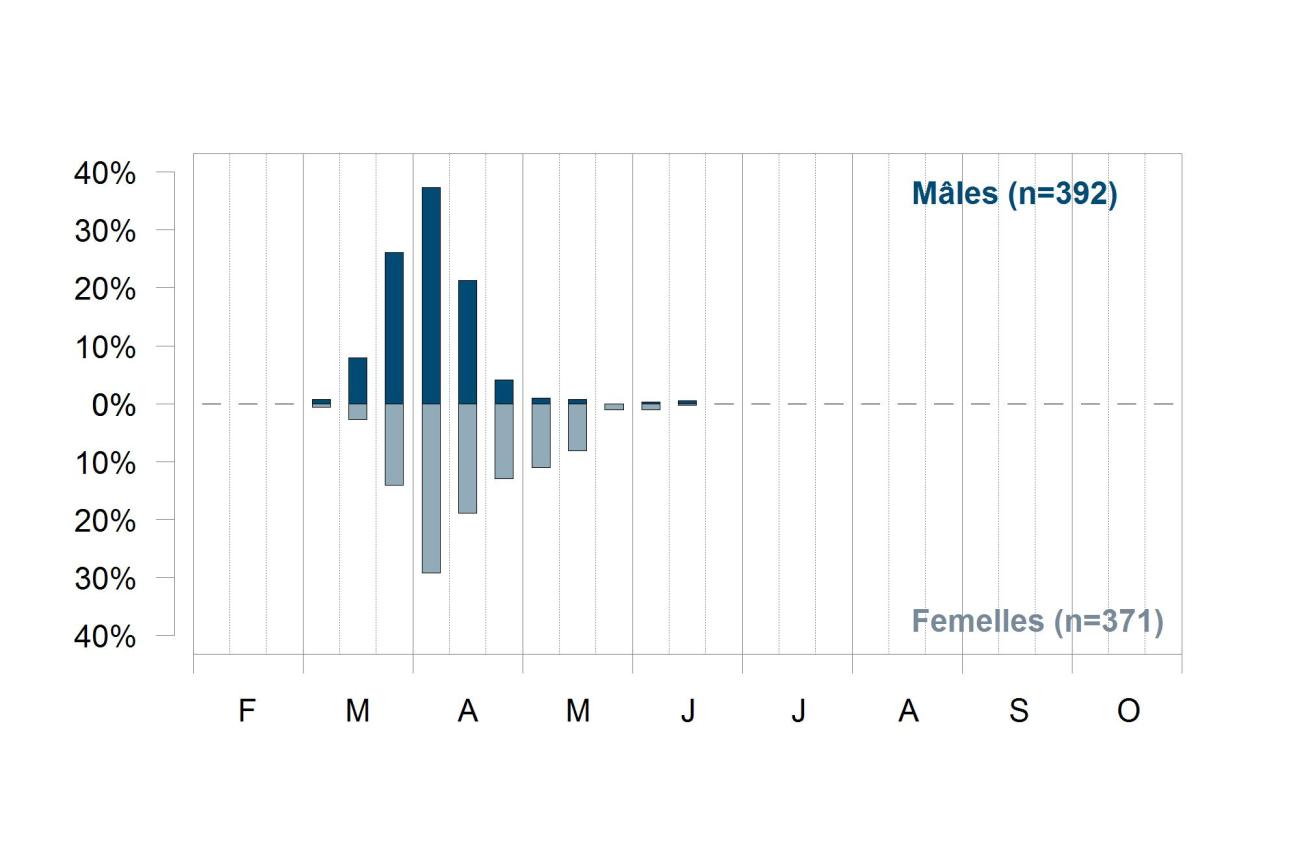
Phänologie von Colletes cunicularius in der Schweiz.
Verbreitung
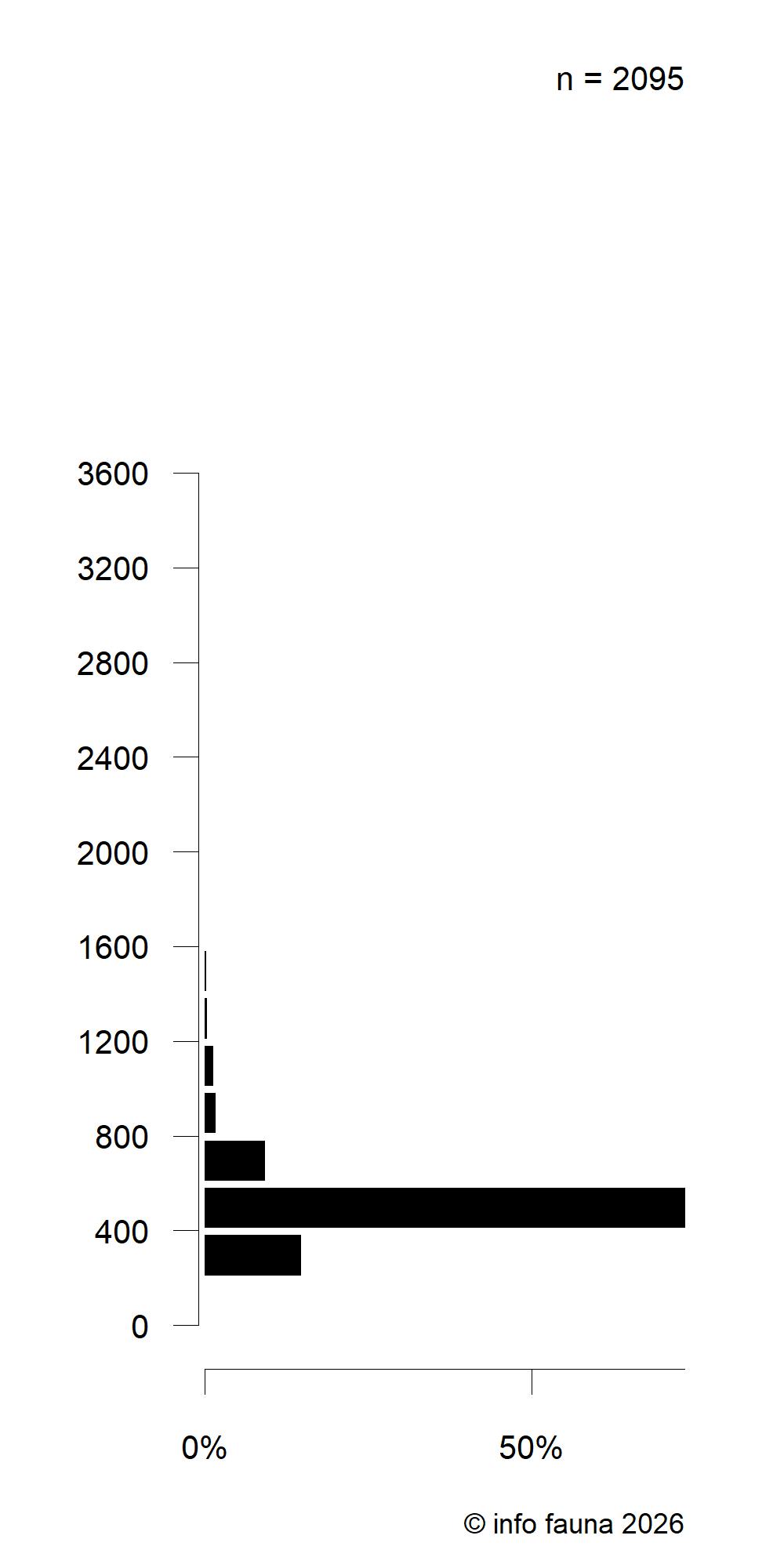
C. cunicularius ist in der Schweiz weit verbreitet. Da die Art nur vereinzelt über 700 m steigt, fehlt sie mit Ausnahme der Tallagen in weiten Teilen der Alpen und des Juras. Abgesehen von einem fraglichen alten Fund aus dem Tessin gibt es von C. cunicularius keine Nachweise auf der Alpensüdflanke. C. cunicularius ist häufig, vor allem in Gebieten mit leichten Böden.
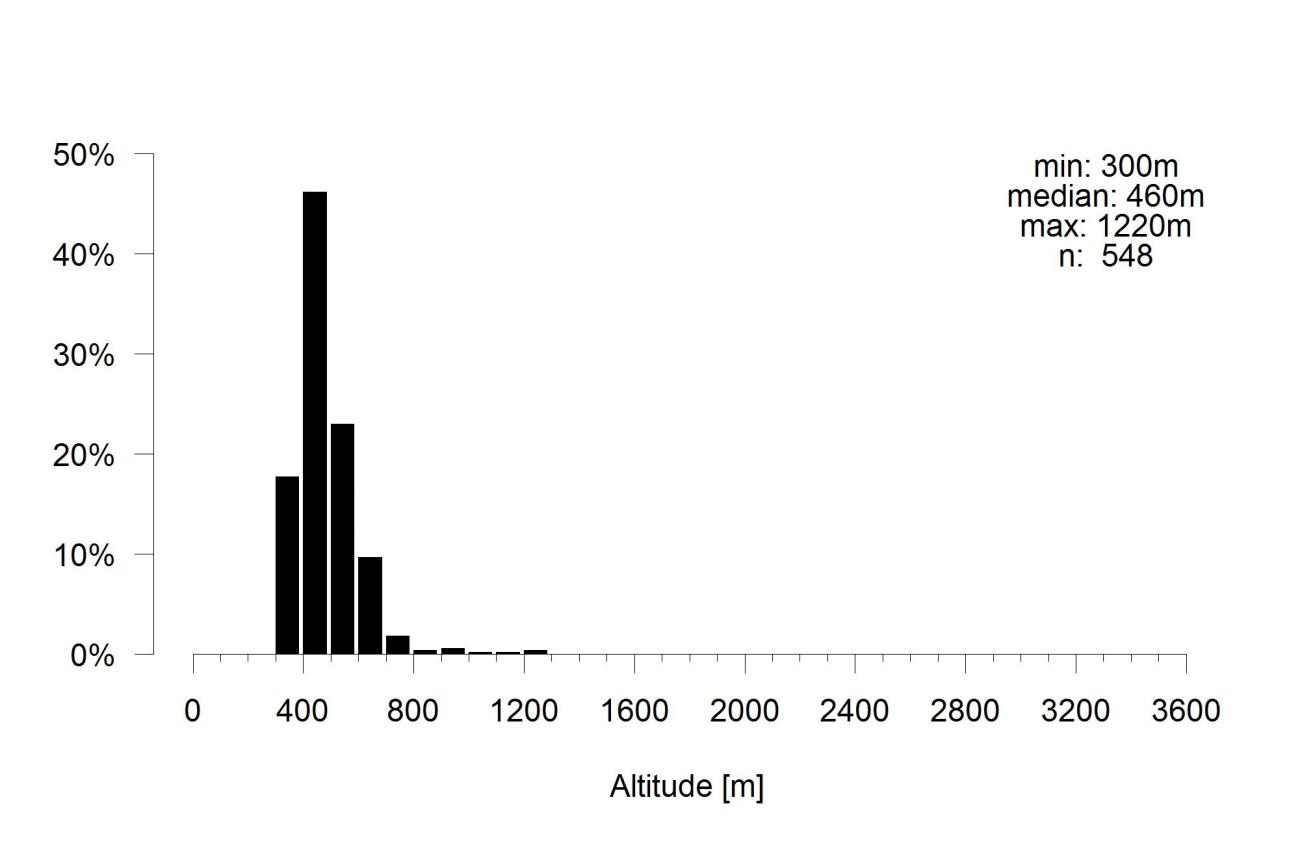
Höhenverteilung von Colletes cunicularius in der Schweiz.
Schutz
Bedrohungstatus
Colletes cunicularius wird in der Roten Liste als nicht bedroht (LC) eingestuft (Müller & Praz 2024). Damit gehört sie nicht zu den gefährdeten Arten und ist keine Rote Liste Art.