Salta al contenuto principale

Trachemys scripta elegans

(Wied, 1839)
Tartaruga orecchie rosse
Tipo di presenza in Svizzera

Introdotta, vietata dall'allegato 2 OEDA (NLV)

Minacce e protezione

Grado di minaccia
Secondo le Categorie e i criteri della Lista Rossa dell’UICN o secondo Duelli et al. 1994.
(exp = valutazione degli/delle esperti/e)

Status di protezione (CH)
Ai sensi delle leggi e alle ordinanze nazionali specifiche.

Grado di minaccia (CH)

Non valutato a livello regionale (NE)

Statut de protection (CH)

Ai sensi delle leggi e delle ordinanze citate

Lois et ordonnances

Leggi e Ordinanze

Conservazione
Priorità nazionale
Livelli operativi
Indicazioni sul livello operativo
Urgenza temporale con cui attuare (CH)
Protezione popolazioni isolate
Monitoraggio delle popolazioni
Specie bersaglio e ecologia

Settore agricolo (OEA/UZL)
Specie bersaglio/caratteristiche secondo: Obiettivi ambientali per l’agricoltura “Specie e habitat”.
(* = valutazione degli/delle esperti/e)

Foreste
2: Specie forestale bersaglio secondo: Biodiversität und Wald: Ziele und Massnahmen. Vollzugshilfe zur Erhaltung und Förderung der biologischen Vielfalt im Schweizer Wald (Imesch et al. 2015).

1: Specie forestale bersaglio complementare, definita nell’ambito dei piani d’azione UFAM (ad es. Piano d’azione Boschi radi FR/DE)

Settore agricolo (OEA/UZL)
Foreste

    Taxon ben studiato, mappa vicina alla distribuzione reale Maggiori informazioni

    Mappa
    Trachemys scripta elegans
    Mappa delle osservazioni di Trachemys scripta elegans in Svizzera (risoluzione 5x5 km).Visualizza la mappa
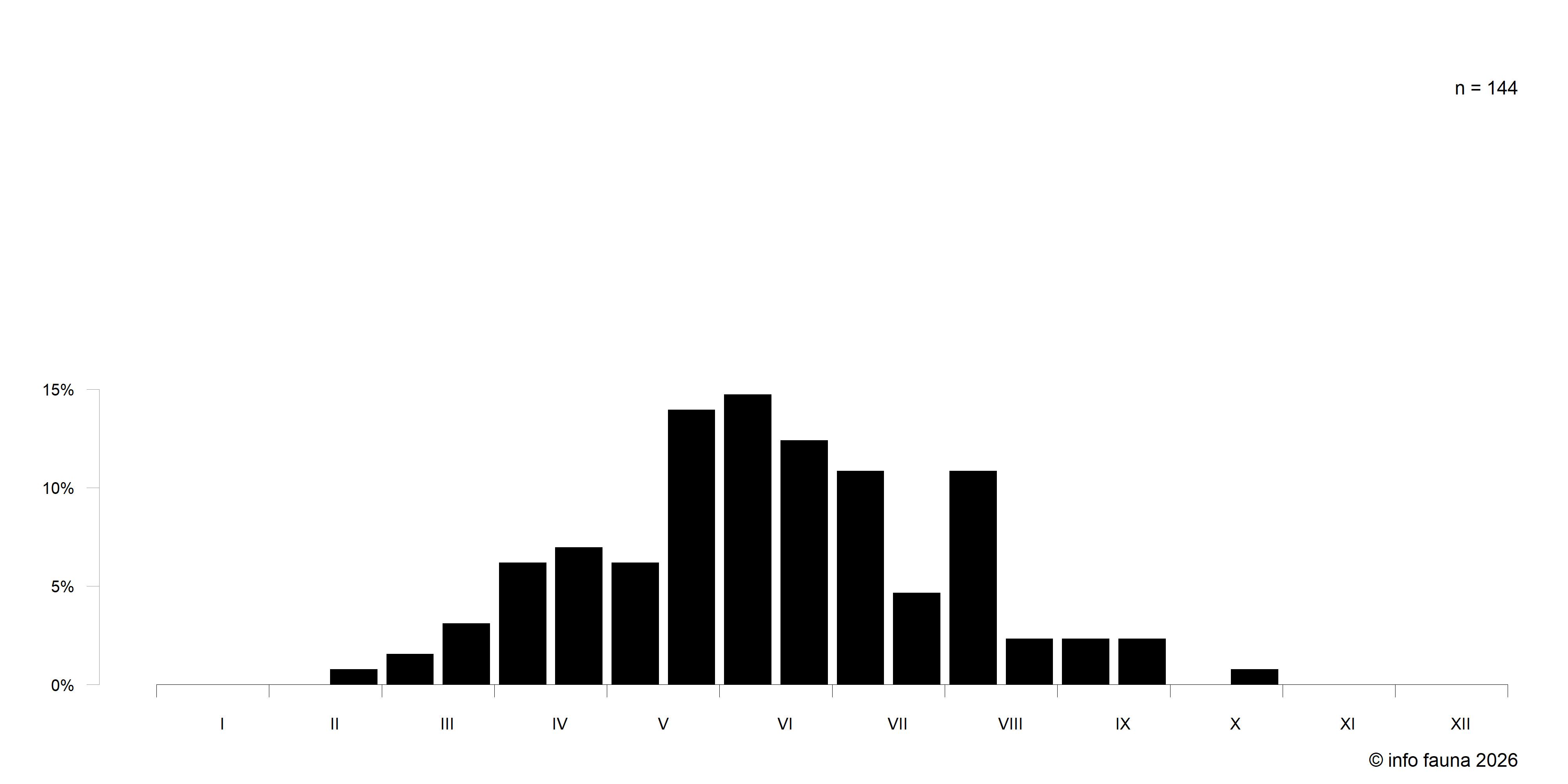
    Periodo delle osservazioni di Trachemys scripta elegans in Svizzera. Il grafico mostra la proporzione di tutte le osservazioni per quindicina.
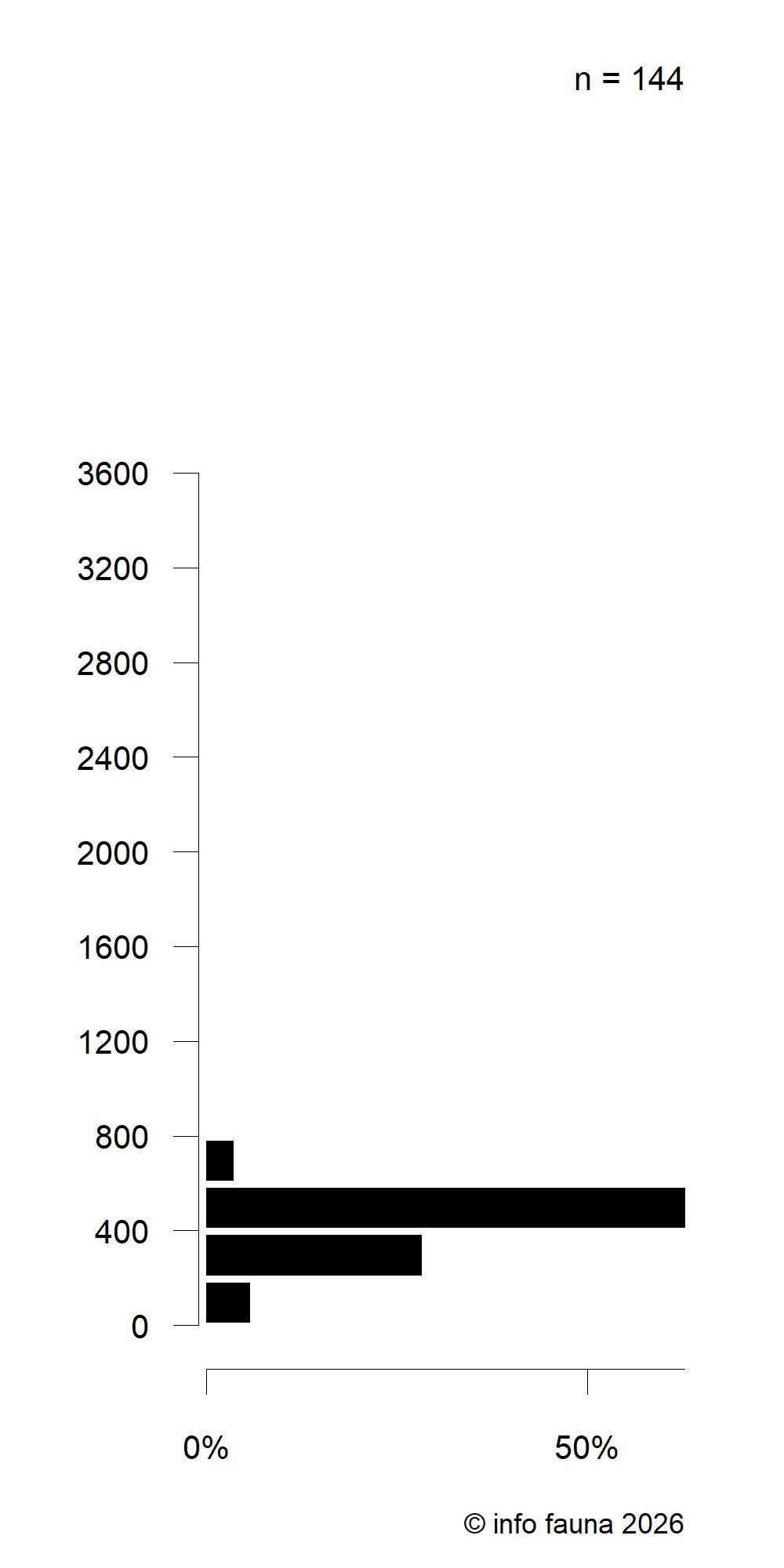
    Altitudine delle osservazioni di Trachemys scripta elegans in Svizzera. Il grafico mostra la proporzione di tutte le osservazioni per fasce altitudinali di 200 m. 

    Classificazione

    • Chordata (Phyllum)
      • Reptilia (Classe)
        • Chelonii (Ordine)
          • Emydidae (Famiglia)
            • Trachemys (Genere)

    Riferimenti bibliografici

    The growth of the slider turtle, Pseudemys scripta elegans
    Cagle, F. R. (1946). The growth of the slider turtle, Pseudemys scripta elegans. American Midland Naturalist, 36, 685-739.
    A review of the helminths co-introduced with Trachemys scripta elegans – a threat to European native turtle health
    Demkowska-Kutrzepa, M., Studzinska, M., Roczen-Karczmarz, M., Tomczuk, K., Abbas, Z., & Rozanski, P. (2018). A review of the helminths co-introduced with Trachemys scripta elegans – a threat to European native turtle health. Amphibia-Reptilia, 39, 177-189.
    Introduction and invasion of the red-eared slider and its parasites in freshwater ecosystems of Southern Europe: risk assessment for the European pond turtle in wild environments
    Héritier, L., Valdeón, A., Sadaoui, A., Gendre, T., Ficheux, S., Bouamer, S., ... & Verneau, O. (2017). Introduction and invasion of the red-eared slider and its parasites in freshwater ecosystems of Southern Europe: risk assessment for the European pond turtle in wild environments. Biodiversity and Conservation, 26.0(8), 1817-1843.
    Impact of the introduction of the red-eared slider (Trachemys scripta elegans) on survival rates of the European pond turtle (Emys orbicularis)
    Cadi, A., & Joly, P. (2004). Impact of the introduction of the red-eared slider (Trachemys scripta elegans) on survival rates of the European pond turtle (Emys orbicularis). Biodiversity and Conservation, 13.0(13), 2511-2518.
    Stable isotope analysis of trophic niche in two co-occurring native and invasive terrapins, Emys orbicularis and Trachemys scripta elegans
    Balzani, P., Vizzini, S., Santini, G., Masoni, A., Ciofi, C., Ricevuto, E., & Chelazzi, G. (2016). Stable isotope analysis of trophic niche in two co-occurring native and invasive terrapins, Emys orbicularis and Trachemys scripta elegans. Biological Invasions, 18.0(12), 3611-3621.
    Pets and invasion risks: is the Slider turtle strictly carnivorous?. Amphibia-Reptilia, 28
    Prévot-Julliard, A., Gousset, E., Archinard, C., Cadi, A., & Girondot, M. (2007). Pets and invasion risks: is the Slider turtle strictly carnivorous?. Amphibia-Reptilia, 28.0(1), 139-143.
    Parasite host-switching from the invasive American red-eared slider, Trachemys scripta elegans, to the native Mediterranean pond turtle, Mauremys leprosa, in natural environments
    Meyer, L., Du Preez, L., Bonneau, E., Héritier, L., Quintana, M., Valdeón, A., ... & Verneau, O. (2015). Parasite host-switching from the invasive American red-eared slider, Trachemys scripta elegans, to the native Mediterranean pond turtle, Mauremys leprosa, in natural environments. Aquatic Invasions, 10.0(1), 79-91.
    Responses to predators differ between native and invasive freshwater turtles: environmental context and its implication for competition
    Costa, Z. J. (2014). Responses to predators differ between native and invasive freshwater turtles: environmental context and its implication for competition. Ethology, 120, 1-8.
    Competition for basking places between the endangered European pond turtle ( Emys orbicularis galloitalica ) and the introduced red-eared slider ( Trachemys scripta elegans )
    Cadi, A., & Joly, P. (2003). Competition for basking places between the endangered European pond turtle ( Emys orbicularis galloitalica ) and the introduced red-eared slider ( Trachemys scripta elegans ). Canadian Journal of Zoology, 81.0(8), 1392-1398.
    Naturalized reptiles and amphibians of the world
    Lever, C. (2003). Naturalized reptiles and amphibians of the world. Oxford University Press.