Aller au contenu principal

Trachemys scripta elegans

(Wied, 1839)
Tortue de Floride à tempes rouges
Type de présence en Suisse

Introduite, interdite selon annexe 2 ODE (NLV)

Menaces et protection

Degré de menace
Selon les Catégories et Critères de la Liste rouge de l’UICN ou selon Duelli et al. 1994.
(exp = appréciation d'expert·e·s)

Statut de protection (CH)
Selon les lois et ordonnances nationales spécifiques.

Degré de menace (CH)

Non évalué au niveau régional (NE)

Statut de protection (CH)

Selon les lois et ordonnances mentionnées

Lois et ordonnances
Conservation

Selon l’aide à l’exécution : Liste des espèces prioritaires au niveau national.

Priorité nationale
Niveau d’action
Indications sur le niveau d’action
Urgence des mesures (CH)
Protection d’occurrences individuelles
Surveillance des populations
Espèce cible et écologie

Domaine agricole (OEA/UZL)
Espèce cible/caractéristique selon : Objectifs environnementaux pour l’agriculture "Espèces et milieux naturels"
(* = appréciation d'expert·e·s)

Forêts 
2 : Espèce cible forestière selon  Biodiversité en forêt : objectifs et mesures. Aide à l’exécution pour la conservation de la diversité biologique dans la forêt suisse (Imesch et al. 2015).
1 : Espèce cible forestière complémentaire, définie dans le cadre de plans d'actions OFEV (p.ex. Plan d'action Forêts claires).

Domaine agricole (OEA/UZL)
Forêts

    Taxon bien étudié, graphique proche de la situation réelle plus d'info

    Carte
    Trachemys scripta elegans
    Carte des observations de Trachemys scripta elegans en Suisse (résolution 5x5 km).Voir la carte
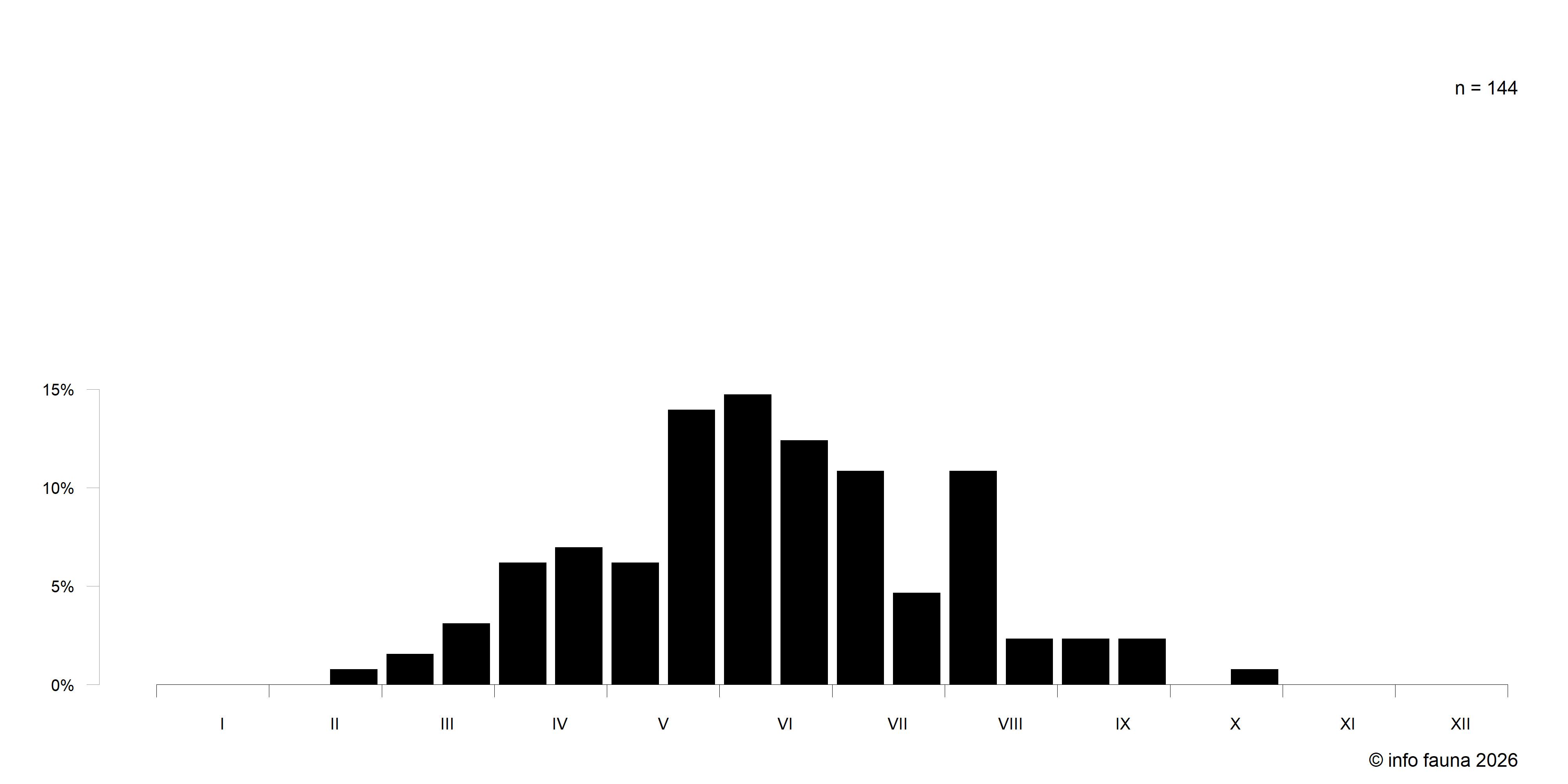
    Période des observations de Trachemys scripta elegans en Suisse. Le graphique montre la proportion de toutes les observations par quinzaine.
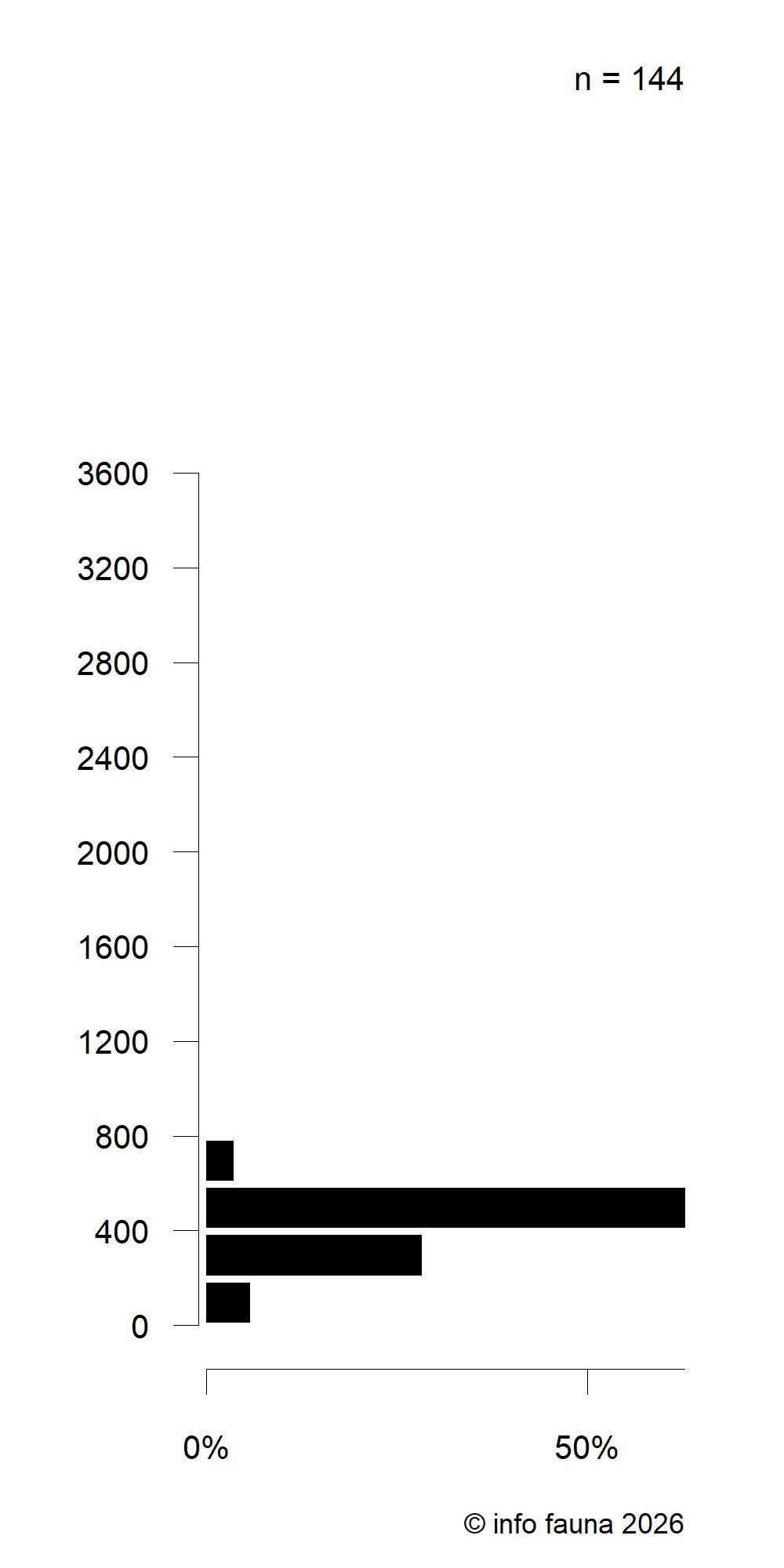
    Altitude des observations de Trachemys scripta elegans en Suisse. Le graphique montre la proportion de toutes les observations par classe d'altitude de 200 m..

    Classification

    • Chordata (Phyllum)
      • Reptilia (Classe)
        • Chelonii (Ordre)
          • Emydidae (Famille)
            • Trachemys (Genre)

    Références bibliographiques

    The growth of the slider turtle, Pseudemys scripta elegans
    Cagle, F. R. (1946). The growth of the slider turtle, Pseudemys scripta elegans. American Midland Naturalist, 36, 685-739.
    A review of the helminths co-introduced with Trachemys scripta elegans – a threat to European native turtle health
    Demkowska-Kutrzepa, M., Studzinska, M., Roczen-Karczmarz, M., Tomczuk, K., Abbas, Z., & Rozanski, P. (2018). A review of the helminths co-introduced with Trachemys scripta elegans – a threat to European native turtle health. Amphibia-Reptilia, 39, 177-189.
    Introduction and invasion of the red-eared slider and its parasites in freshwater ecosystems of Southern Europe: risk assessment for the European pond turtle in wild environments
    Héritier, L., Valdeón, A., Sadaoui, A., Gendre, T., Ficheux, S., Bouamer, S., ... & Verneau, O. (2017). Introduction and invasion of the red-eared slider and its parasites in freshwater ecosystems of Southern Europe: risk assessment for the European pond turtle in wild environments. Biodiversity and Conservation, 26.0(8), 1817-1843.
    Impact of the introduction of the red-eared slider (Trachemys scripta elegans) on survival rates of the European pond turtle (Emys orbicularis)
    Cadi, A., & Joly, P. (2004). Impact of the introduction of the red-eared slider (Trachemys scripta elegans) on survival rates of the European pond turtle (Emys orbicularis). Biodiversity and Conservation, 13.0(13), 2511-2518.
    Stable isotope analysis of trophic niche in two co-occurring native and invasive terrapins, Emys orbicularis and Trachemys scripta elegans
    Balzani, P., Vizzini, S., Santini, G., Masoni, A., Ciofi, C., Ricevuto, E., & Chelazzi, G. (2016). Stable isotope analysis of trophic niche in two co-occurring native and invasive terrapins, Emys orbicularis and Trachemys scripta elegans. Biological Invasions, 18.0(12), 3611-3621.
    Pets and invasion risks: is the Slider turtle strictly carnivorous?. Amphibia-Reptilia, 28
    Prévot-Julliard, A., Gousset, E., Archinard, C., Cadi, A., & Girondot, M. (2007). Pets and invasion risks: is the Slider turtle strictly carnivorous?. Amphibia-Reptilia, 28.0(1), 139-143.
    Parasite host-switching from the invasive American red-eared slider, Trachemys scripta elegans, to the native Mediterranean pond turtle, Mauremys leprosa, in natural environments
    Meyer, L., Du Preez, L., Bonneau, E., Héritier, L., Quintana, M., Valdeón, A., ... & Verneau, O. (2015). Parasite host-switching from the invasive American red-eared slider, Trachemys scripta elegans, to the native Mediterranean pond turtle, Mauremys leprosa, in natural environments. Aquatic Invasions, 10.0(1), 79-91.
    Responses to predators differ between native and invasive freshwater turtles: environmental context and its implication for competition
    Costa, Z. J. (2014). Responses to predators differ between native and invasive freshwater turtles: environmental context and its implication for competition. Ethology, 120, 1-8.
    Competition for basking places between the endangered European pond turtle ( Emys orbicularis galloitalica ) and the introduced red-eared slider ( Trachemys scripta elegans )
    Cadi, A., & Joly, P. (2003). Competition for basking places between the endangered European pond turtle ( Emys orbicularis galloitalica ) and the introduced red-eared slider ( Trachemys scripta elegans ). Canadian Journal of Zoology, 81.0(8), 1392-1398.
    Naturalized reptiles and amphibians of the world
    Lever, C. (2003). Naturalized reptiles and amphibians of the world. Oxford University Press.