
Type de présence en Suisse
Indigène (INN)
ⓘⓧ
Degré de menace
Selon les Catégories et Critères de la Liste rouge de l’UICN ou selon Duelli et al. 1994.
(exp = appréciation d'expert·e·s)
Statut de protection (CH)
Selon les lois et ordonnances nationales spécifiques.
Degré de menace (CH)
Non menacé (LC)
Statut de protection (CH)
ⓘⓧ
Selon les lois et ordonnances mentionnées
–
Lois et ordonnances
–
ⓘⓧ
Selon l’aide à l’exécution : Liste des espèces prioritaires au niveau national.
Priorité nationale
–
Niveau d’action
–
Indications sur le niveau d’action
–
Urgence des mesures (CH)
–
Protection d’occurrences individuelles
–
Surveillance des populations
–
ⓘⓧ
Domaine agricole (OEA/UZL)
Espèce cible/caractéristique selon : Objectifs environnementaux pour l’agriculture "Espèces et milieux naturels".
(* = appréciation d'expert·e·s)
Forêts
2 : Espèce cible forestière selon Biodiversité en forêt : objectifs et mesures. Aide à l’exécution pour la conservation de la diversité biologique dans la forêt suisse (Imesch et al. 2015).
1 : Espèce cible forestière complémentaire, définie dans le cadre de plans d'actions OFEV (p.ex. Plan d'action Forêts claires).
Domaine agricole (OEA/UZL)
–
Forêts
–
✓
Taxon bien étudié, graphique proche de la situation réelle plus d'info
Carte
Carte des observations de Andrena vaga en Suisse (résolution 5x5 km).Voir la carte
Période
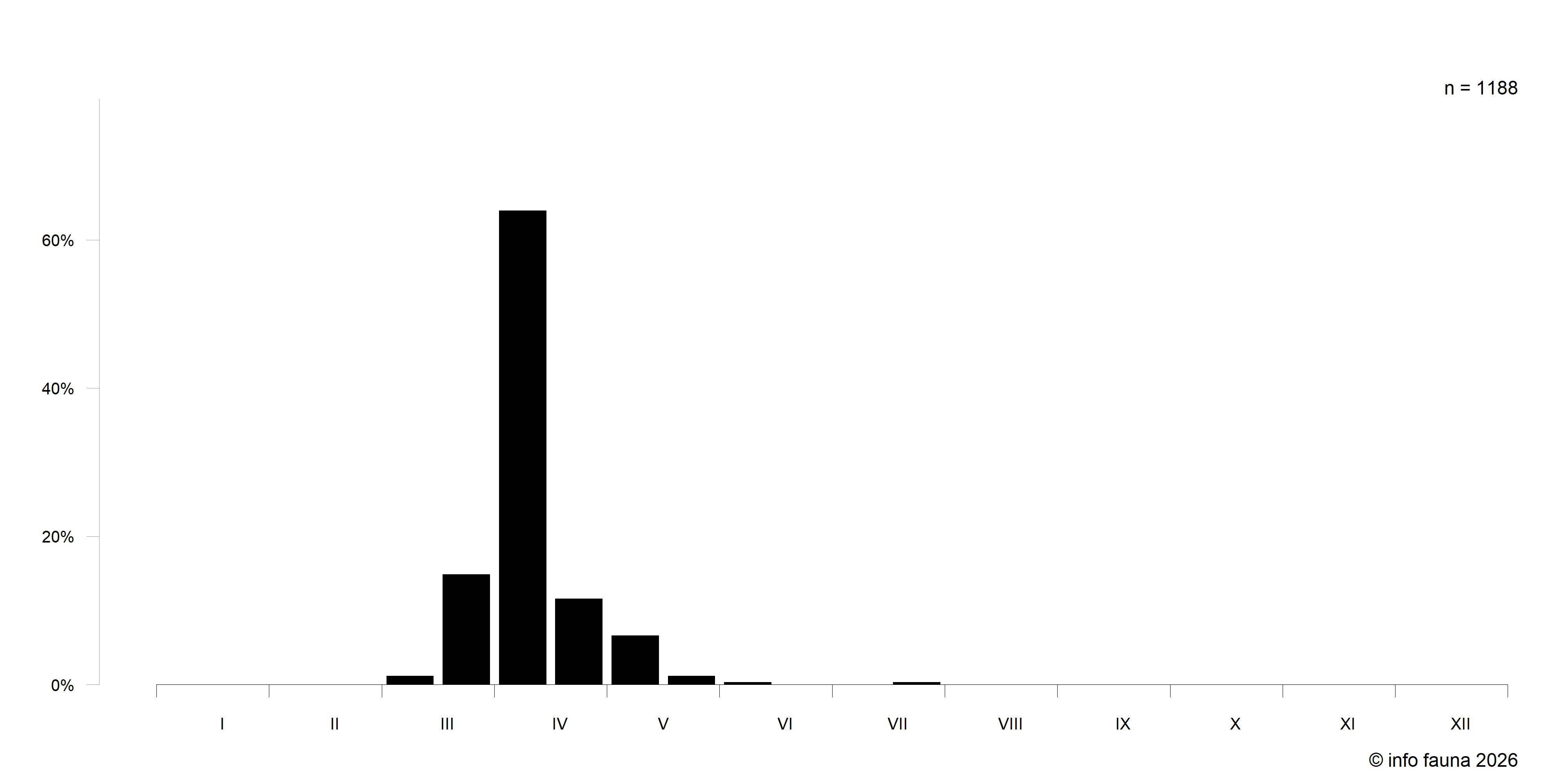
Période des observations de Andrena vaga en Suisse. Le graphique montre la proportion de toutes les observations par quinzaine.
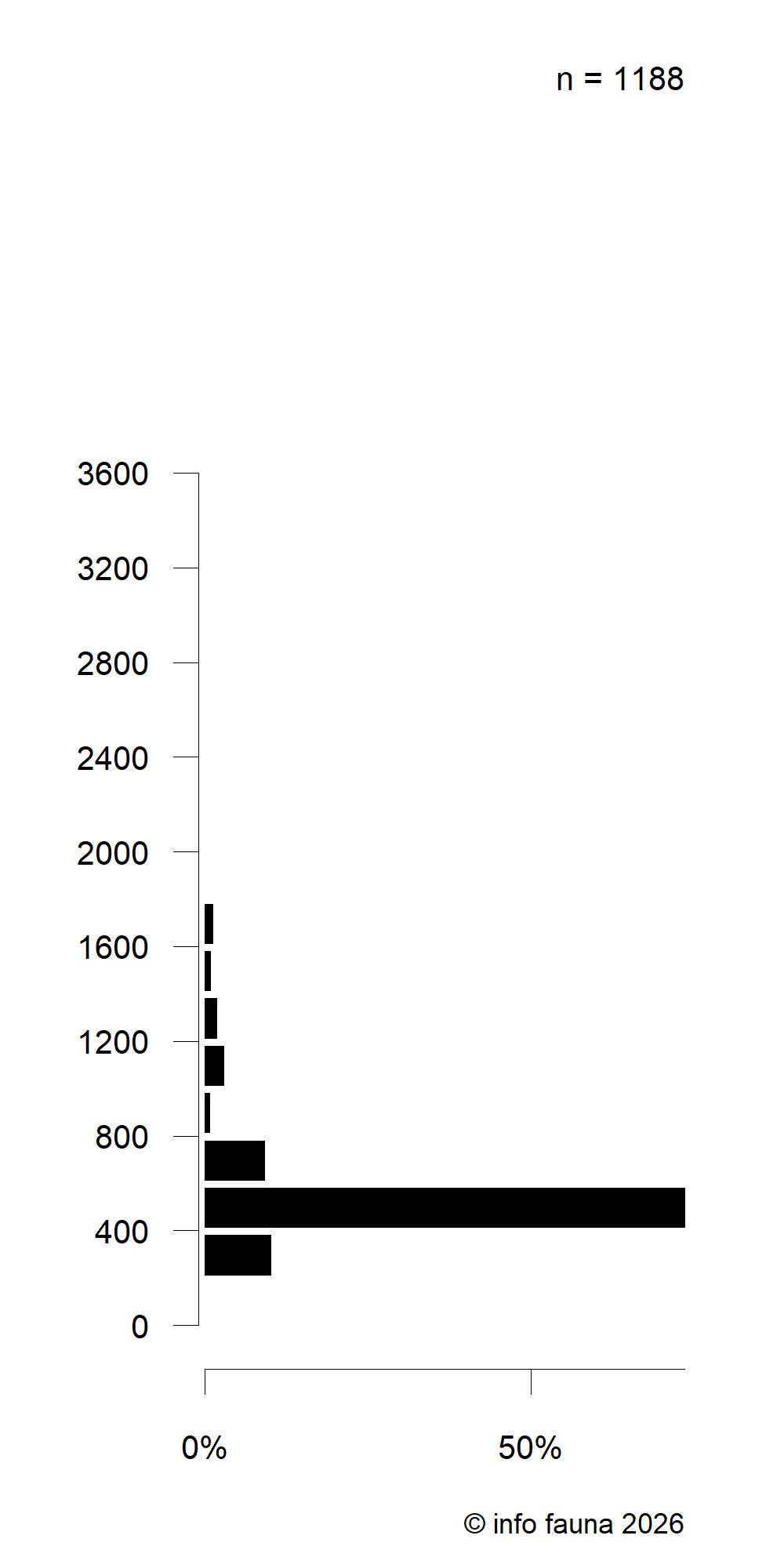
Classification
- Arthropoda (Phylum)
- Insecta (Classe)
- Hymenoptera (Ordre)
- Apidae, Andreninae (Famille)
- Andrena (Genre)
- Apidae, Andreninae (Famille)
- Hymenoptera (Ordre)
- Insecta (Classe)
Portrait de l'espèce
Auteur-e-s
Sophie Giriens, Dimitri Bénon
Portrait
Description et taxonomie
Andrena vaga est une espèce grande taille (13-15 mm) dont les femelles se reconnaissent facilement sur le terrain par leur longue pilosité gris-blanc recouvrant tout le thorax. Elles ressemblent à celles d'A. cineraria et d'A. barbareae, mais chez ces deux espèces la femelle possède une bande de poils noirs bien visible sur le dessus du thorax. Les femelles possèdent une longue pilosité gris-blanc sur le thorax et au moins une partie de la face, ainsi que sur les côtés des tergites. Les pattes et les côtés de la face sont recouverts de poils brun-noir. La frange terminale et la scopa sont elles aussi noires. L'abdomen est noir et brillant et les ailes nettement fumées.

A. vaga est une espèce typique des milieux sableux. L'espèce niche cependant aussi régulièrement dans les sols de Loess. Photo © Albert Krebs.
Les mâles ressemblent aux femelles. Ils ont de longues mandibules et une dense pilosité blanche sur le clypeus. Il ressemble toutefois beaucoup aux mâles d'A. cineraria car ces derniers n'ont pas de bande noire sur le mesonotum (au contraire des femelles). Une identification sur le terrain n'est donc pas possible.

Mâle fraîchement éclos (Charrat VS, début avril 2018). Photo © Sophie Giriens.
Biologie et habitat
Habitat
Andrena vaga se rencontre dans les milieux thermophiles où l'on trouve de grandes zones de sol meuble, sableux ou limoneux. On la rencontre ainsi souvent en zone alluviale, mais aussi dans les zones de Loess, les pentes sableuses/limoneuses ou encore les gravières.
Sources de pollen
A. vaga est une espèce spécialisée sur Salicaceae. Elle récolte le pollen de nombreuses espèces, notamment de Salix cinerea, S. caprea, S. purpurea, S. aurita, S. alba, S. pentandra et S. nigricans. Du pollen de Rosaceae, Fagaceae (Quercus) et Betulaceae (Betula) a été aussi retrouvé en faible proportion dans les pains de pollen du couvain. La distance maximale à laquelle les femelles s'éloignent de leur nid est d'environ 510 m (à cette distance, seul 10% des femelles retrouvent leur nid). La quantité de pollen nécessaire pour une seule cellule à couvain correspond environ à 7.5 inflorescences (chatons) de Salix (moyenne de 47.6 mm3 de pollen par cellule). (Gathmann & Tscharntke 2002, Bischoff et al. 2003, Müller et al. 2006, Westrich 2018).
Les jeunes femelles répondent fortement au 1,4-Dimethoxybenzène, un composé produit par toutes les espèces du genre Salix. Son effet diminue avec le temps, les femelles n'y étant plus réceptives en fin de saison. Probablement que ce composé permet aux jeunes femelles inexpérimentées de trouver efficacement leurs plante-hôtes, les femelles expérimentées apprenant à reconnaître un mélange plus complexe d'odeurs. Les mâles ne semblent pas attirés par ce composé, mais les mâles testés y étaient peut-être déjà habitués, les expériences ayant été faites à la même période pour les deux sexes alors que les mâles émergent plusieurs semaines avant les femelles. (Dötterl et al. 2005).
L'activité journalière d'A. vaga a été étudiée en détail. Les femelles sont généralement actives entre 10h et 17h. La période d'activité de l'espèce est corrélée avec la température, il est donc possible que selon le site de nidification A. vaga fasse des journées plus longues. Au cours d'une même journée, une femelle récolte soit du pollen, soit du nectar. En moyenne, une journée à pollen consiste en trois vols de récolte d'environ 2h chacun, l'abeille restant dans le nid une trentaine de minutes entre chaque vol. La journée à nectar est plus courte et consiste en un seul vol de plus de 3h. Le reste du temps, la femelle reste dans son nid, sans qu'on ne sache si elle se repose ou construit son nid (creuse les galeries, etc.). Une femelle fait en général 4 (1-9) vols à pollen entre deux vols à nectar. (Bischoff et al. 2003, Rezkova et al. 2012).
Nidification
A. vaga niche de préférence dans les sols sableux, mais elle utilise aussi si besoin des sols limoneux. Les nids sont creusés par les femelles dans des zones de sol nu ou à faible couvert végétal, souvent à plat ou que légèrement en pente. Les bords de chemin, de champs et les bancs d'alluvion sont souvent des sites de nidification propice.

Site de nidification dans un sol lœssique au bord d'un chemin en Valais (Charrat VS, début avril 2017). Photo © Sophie Giriens.
L'espèce niche en agrégation de taille variable, allant d'une dizaine de nids à plusieurs milliers (jusqu'à 10'000, avec plus de 30 nids au m2). Il semble qu'au sein d'une même génération de femelles, certaines quittent rapidement la zone pour fonder une nouvelle agrégation ailleurs alors que les autres restent toute la saison à l'endroit où elles sont nées. Le nid est constitué d’une galerie principale atteignant 25-60 cm de profondeur et de 1-4 galeries secondaires de 4-6 cm de long contenant chacune une cellule. Les anciens nids sont réutilisés par la nouvelle génération. Une femelle a besoin d’environ 4 vols pour approvisionner une cellule. Une fois la cellule approvisionnée, la galerie secondaire qui y mène est rebouchée avec du sol. À chaque envol, la femelle bouche l’entrée du nid et dépose une marque olfactive pour la retrouver plus tard. (Popova 1983, Steinmann 1990, Bischoff et al. 2003, Fellendorf et al. 2004, Westrich 2018).

Cellule avec un œuf déposé sur la réserve de pollen (Illnau ZH, 1996). Photo © Albert Krebs.
Parasites
A. vaga est régulièrement parasitée par l'abeille-coucou Nomada lathburiana. Comme le nid est toujours fermé en l’absence de l’andrène, ses parasites doivent creuser pour trouver les cellules à couvain. Sphecodes gibbus est aussi probablement un hôte de l'espèce. Les diptères Bombylius major, Leucophora cinerea, et le strepsiptère Stylops melittae sont également mentionnés comme parasites, ainsi que plusieurs espèces de coléoptère du genre Meloë. De nombreux microparasites (virus, champignons, etc.) ont aussi été retrouvés chez des spécimens d'A. vaga. (Fellendorf et al. 2004, Smit & Smit 2005, Amiet et al. 2010, Ravoet et al. 2014, Westrich 2018).

Deux femelles de Nomada lathburiana surveillent une femelle d'Andrena vaga (Charrat VS, début avril 2017). Photo © Sophie Giriens.
Comportement de reproduction
Les mâles cherchent les femelles en patrouillant en cercle ou en zigzag au-dessus des sites de nidification ou autour des arbres. Ils effectuent aussi leurs recherches au sol et creusent même parfois dans le but de trouver une femelle fraîchement émergée. Plusieurs mâles peuvent essayer de s’accoupler avec une même femelle. La femelle ne s’accouple cependant qu’une seule fois et les prochaines tentatives des mâles sont repoussées. La copulation dure quelques secondes. Une fois fécondée, la femelle reste 1 à 3 jours dans le nid, probablement en attendant que ses œufs arrivent à maturité. (Hallmen 1991, Westrich 1989, Peeters et al. 2012).

Mâle creusant à la recherche d'une femelle cachée dans sa galerie (Charrat VS, début avril 2018). Photo © Sophie Giriens.
Distribution
Cycle de vie
Andrena vaga passe l’hiver au stade d’imago. C'est une espèce univoltine. Les femelles volent de mi-mars à fin mai, les mâles émergeant 2-3 semaines plus tôt. (Bischoff 1922).

Phénologie d'Andrena vaga en Suisse.
Distribution
L’espèce est largement présente en Suisse à basse altitude. On la rencontre surtout sur le Plateau, la Plaine du Rhône et les vallées du Rhin. Elle est nettement moins fréquente dans la région de l'Arc lémanique ainsi qu'au Tessin et aux Grisons. Elle vole surtout entre 300 m et 700 m d'altitude.

Distribution altitudinale d'Andrena vaga en Suisse.
Conservation
Cette page n'a malheureusement pas été traduite dans la langue sélectionnée. Elle s'affiche dans la langue de l'auteur.
Bedrohungsstatus
Andrena vaga wird in der Roten Liste als nicht bedroht (LC) eingestuft (Müller & Praz 2024). Damit gehört sie nicht zu den gefährdeten Arten und ist keine Rote Liste Art.