
Type de présence en Suisse
Indigène (INN)
ⓘⓧ
Degré de menace
Selon les Catégories et Critères de la Liste rouge de l’UICN ou selon Duelli et al. 1994.
(exp = appréciation d'expert·e·s)
Statut de protection (CH)
Selon les lois et ordonnances nationales spécifiques.
Degré de menace (CH)
Non menacé (LC)
Statut de protection (CH)
ⓘⓧ
Selon les lois et ordonnances mentionnées
–
Lois et ordonnances
–
ⓘⓧ
Selon l’aide à l’exécution : Liste des espèces prioritaires au niveau national.
Priorité nationale
–
Niveau d’action
–
Indications sur le niveau d’action
–
Urgence des mesures (CH)
–
Protection d’occurrences individuelles
–
Surveillance des populations
–
ⓘⓧ
Domaine agricole (OEA/UZL)
Espèce cible/caractéristique selon : Objectifs environnementaux pour l’agriculture "Espèces et milieux naturels".
(* = appréciation d'expert·e·s)
Forêts
2 : Espèce cible forestière selon Biodiversité en forêt : objectifs et mesures. Aide à l’exécution pour la conservation de la diversité biologique dans la forêt suisse (Imesch et al. 2015).
1 : Espèce cible forestière complémentaire, définie dans le cadre de plans d'actions OFEV (p.ex. Plan d'action Forêts claires).
Domaine agricole (OEA/UZL)
–
Forêts
–
✓
Taxon bien étudié, graphique proche de la situation réelle plus d'info
Carte
Carte des observations de Colletes hederae en Suisse (résolution 5x5 km).Voir la carte
Période
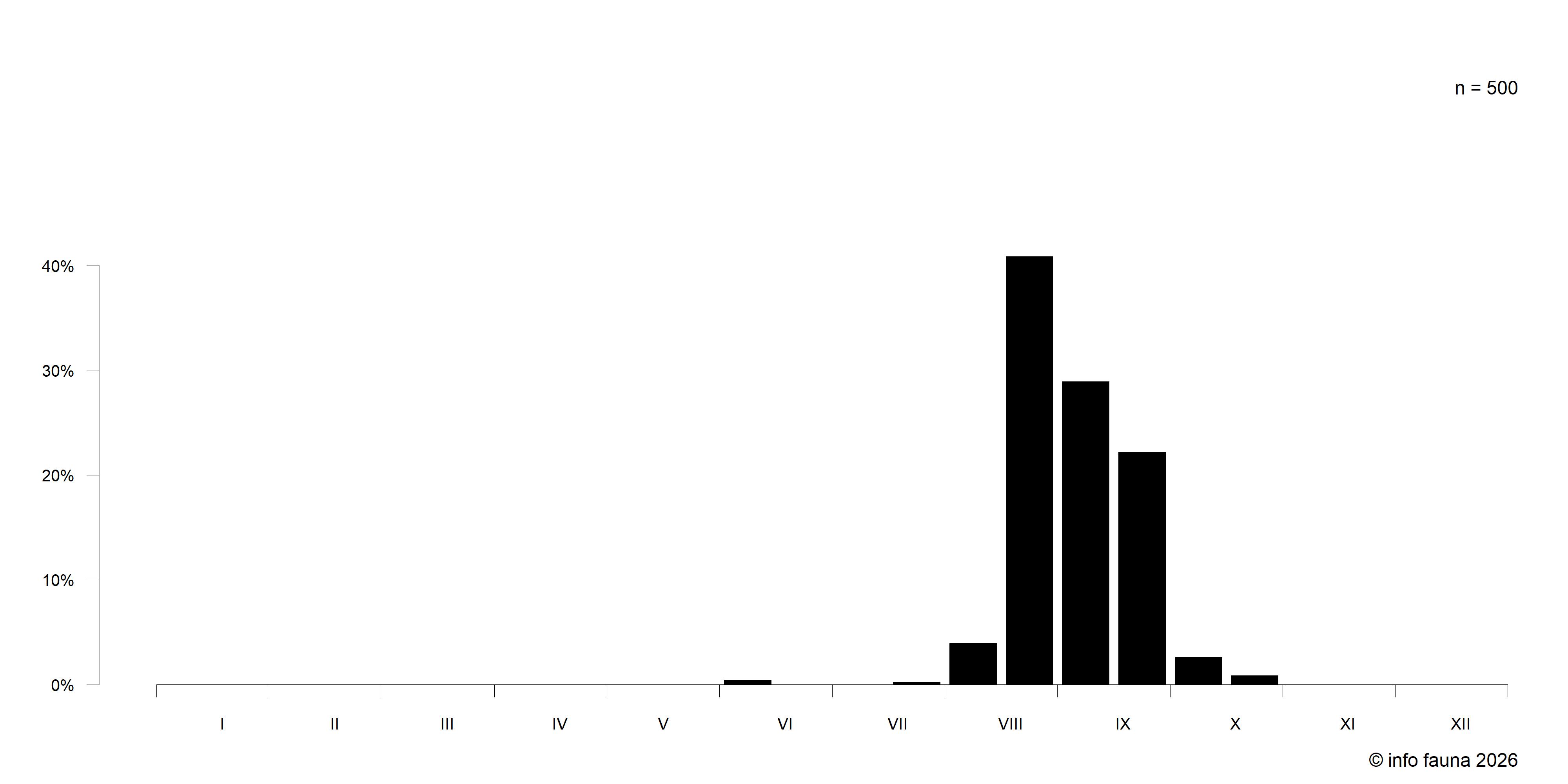
Période des observations de Colletes hederae en Suisse. Le graphique montre la proportion de toutes les observations par quinzaine.
Classification
- Arthropoda (Phylum)
- Insecta (Classe)
- Hymenoptera (Ordre)
- Apidae, Colletinae (Famille)
- Colletes (Genre)
- Apidae, Colletinae (Famille)
- Hymenoptera (Ordre)
- Insecta (Classe)
Portrait de l'espèce
Auteur-e-s
Andreas Müller
Portrait
Description et taxonomie

Colletes hederae est une grande espèce qui ne vole qu'à la fin de l'été (Marin NE, début octobre 2018). Photo © Sophie Giriens.
Colletes hederae est une moyenne à grande espèce (9-14 mm) dont les femelles sont facilement reconnaissables à la pilosité rouge-rouille vive sur la face supérieure du thorax, aux larges bandes abdominales (blanches brunâtres lorsqu'elles sont fraîches), à leur phénologie tardive et à leur forte préférence pour le lierre. Étant donné que les autres espèces de Colletes au vol tardif (C. collaris, C. nigricans et C. succinctus) sont très localisées en Suisse, ou sont nettement plus petites (C. similis), les mâles de C. hederae, au moins ceux de grande taille (9-13 mm), peuvent être reconnus sur le terrain avec une certaine fiabilité dans une grande partie de la Suisse

La pilosité des mâles est brun clair à orange, également sur les tergites (Marin NE, début octobre 2018). Photo © Sophie Giriens.
Biologie et habitat
Habitat
Colletes hederae est présente partout où se trouvent de grandes populations d’Hedera helix ainsi que des zones de sol meuble, surtout sableux, autour des plantes hôtes. Par conséquent, l'espèce habite principalement les jardins, les parcs et les cimetières des zones urbaines, mais également les forêts clairsemées, les vignobles et d'autres habitats riches en lierre.
Sources de pollen
C. hederae est polylectique, mais collecte le pollen préférentiellement sur Hedera (Araliaceae). Toutefois, l’attachement à Hedera est moins strict qu'on ne l'avait supposé initialement, car, depuis, d’autres plantes ont été identifiées comme sources de pollen supplémentaires pour l’espèce parmi les représentants des Anacardiaceae (Rhus), des Asteraceae (par ex. Cosmea, Helminthotheca, Hieracium, Solidago), des Brassicaceae (par ex.Diplotaxis), Colchicaceae (Colchicum), Ericaceae (par ex. Calluna), Fabaceae (par ex. Medicago, Melilotus, Trifolium), Orobanchaceae (par ex. Odontites) et Polygonaceae (par ex. Fallopia). Ces sources de pollen complémentaires sont utilisées surtout - mais pas exclusivement - lorsque Hedera n'a pas encore fleuri. Pour l'approvisionnement en pollen d’Hedera d'une cellule à couvain, par beau temps, il faut environ une journée et une moyenne de 5,5 vols de collecte d’une heure chacun en moyenne. Cependant, dans des conditions optimales, les femelles peuvent effectuer jusqu'à dix vols de collecte par jour, s’approvisionnant sur des populations de lierre jusqu'à plus d'un kilomètre du nid. Les femelles en quête de nourriture sont également actives par temps couvert et frais, mais non pluvieux probablement afin de s'adapter à leur phénologie tardive. Plusieurs femelles ont été observées collectant encore du pollen à des températures ambiantes de 10°C (Westrich, 2015) (Westrich 1996, Bischoff et al. 2005, Müller & Kuhlmann 2008, Westrich 2008, Peeters et al. 2012, Falk & Lewington 2015, Teppner & Brosch 2015, Westrich 2015, Else & Edwards 2018, Westrich 2018).
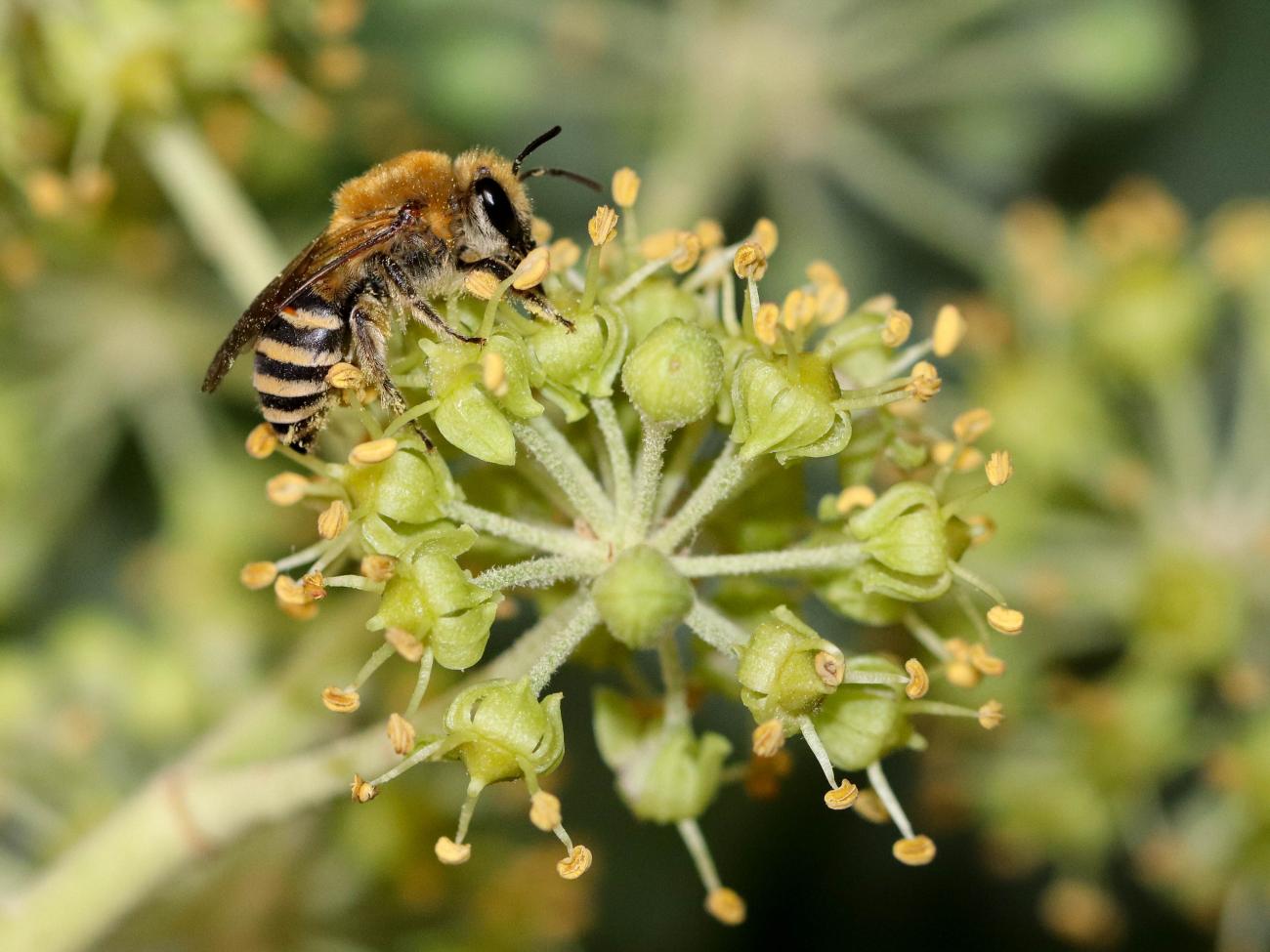
Femelle de Colletes hederae sur une fleur d’Hedera helix (Estavayer FR, mi-septembre 2020). Photo © Sophie Giriens.
Nidification
C. hederae niche dans des galeries qu’elle creuse dans le sol. Les femelles réutilisent souvent d'anciens nids dont elles développent le système de galeries. L'espèce a une nette préférence pour les zones sans végétation ou clairsemées, bien ensoleillés et sur sol sableux. Elle colonise d’ailleurs régulièrement les bacs à sable des terrains de jeux pour enfants. Cependant, C. hederae niche aussi occasionnellement sur des sites plus végétalisés et plus limoneux ou humifères. Les surfaces planes et inclinées, souvent même les murs abrupts, sont utilisées pour la nidification. L'espèce niche généralement dans des agrégations de petite à grande taille, qui peuvent comprendre jusqu'à plusieurs dizaines de milliers de nids et jusqu’à 120 à 300 nids par mètre carré. Les nids examinés issus de parois abruptes se composaient d'un passage principal qui s'étendait d'abord horizontalement sur une longueur de 7-30 cm avant de s’arquer et de plonger verticalement vers le bas sur une longueur allant jusqu'à 60 cm. Les quatre à huit cellules à couvain par nid étaient situées à une profondeur de 30-60 cm et étaient disposées individuellement ou par groupes de deux à quatre cellules par rangée dans de courtes galeries latérales partant du passage principal vertical. Quel que soit le nombre de cellules à couvain par galerie latérale, la dernière cellule à couvain construite débouche toujours dans le passage principal. Dans les nids examinés issus de sol horizontal, les cellules à couvain orientées verticalement ou horizontalement étaient situées à une profondeur de 12-42 cm, seules ou par paires, l'une derrière l'autre en rangée dans des galeries latérales partant du passage principal. Les galeries latérales ont probablement été remplies de sable après l'achèvement de la ou des cellules à couvain. Les cellules à couvain sont tapissées d'une membrane très fine, semblable à de la cellophane, transparente et imperméable à l'eau. Cette membrane est constituée par les sécrétions abdominales de la glande de Dufour qui sont appliquées sur les parois avec la langue bilobée spécialisée et qui, grâce à l'ajout de sécrétions thoraciques des glandes salivaires, se solidifient en une pellicule ferme.
Les femelles semblent ne construire qu'un seul nid au cours de leur vie et sont capables d’approvisionner 12-18 cellules à couvain lors de bonnes conditions (Mayet 1875, Bischoff et al. 2005, Peeters et al. 2012, Estrich 2015, Else & Edwards 2018, Westrich 2018).
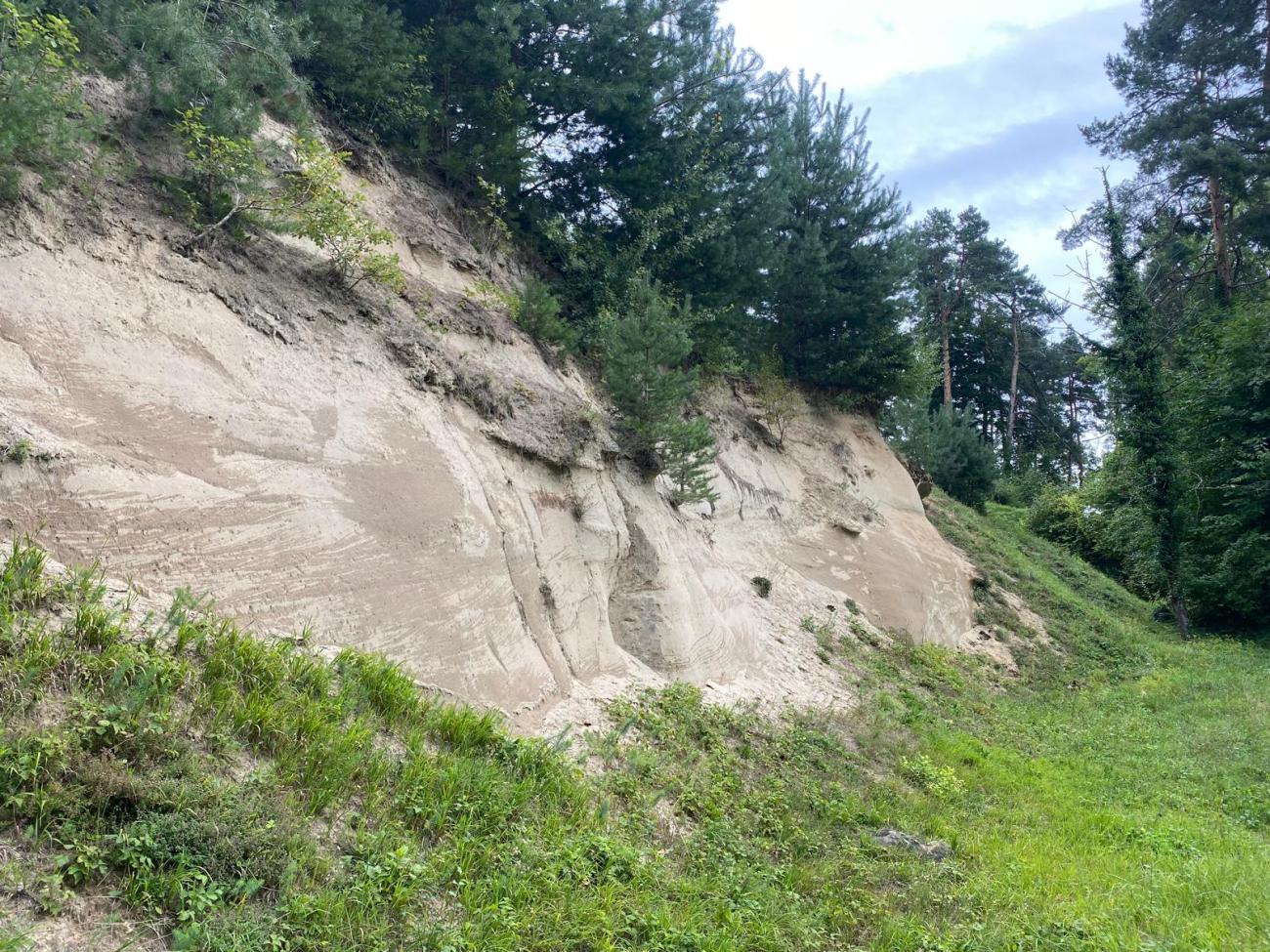
Site de nidification de Colletes hederae avec une importante agrégation de nids (Teufen ZH, début septembre 2025). Photo © Lorenz Achtnich.

Femelle de Colletes hederae quittant le nid (Ramsen SH, mi-septembre 2024). Photo © Urs Weibel.

Cellule de couvain de Colletes hederae avec le revêtement translucide typique, semblable à du cellophane (Schaffhouse SH, mi-septembre 2024). Photo © Urs Weibel.
Espèces parasites
C. hederae est parasitée par les abeilles-coucous Epeolus cruciger et E. fallax qui n’a, pour sa part, encore jamais été signalée en Suisse. Comme les deux espèces d’Epeolus s'étendent actuellement vers le nord accompagnant la propagation de leur hôte, on peut s'attendre à ce qu’E. fallax atteigne également la Suisse dans un avenir proche. En Normandie, E. variegatus a également été observée dans les nids de C. hederae (Moenen, 2009) ; cependant, la mesure dans laquelle cette espèce parasite réellement C. hederae en Suisse reste à clarifier. Un autre parasite alimentaire est le coléoptère Stenoria analis (Meloidae), qui, comme les deux espèces Epeolus, s'est rapidement répandu avec son hôte ces dernières années et qui peut maintenant être observé dans de nombreuses colonies de nids de C. hederae. Une étude réalisée dans le sud de la France a montré que sur 100 cellules à couvain de C. hederae, 25 étaient parasitées par S. analis et cinq par E. fallax (Mayet, 1875) (Mayet 1875, Vereecken & Mahé 2008, Moenen 2009, Westrich & Büller 2016, Lückmann 2017, Westrich 2018).
Comportement de reproduction
Les mâles à la recherche de femelles patrouillent autour des inflorescences de lierre ou vérifient les agrégations de nids pour trouver au sol d’éventuelles femelles écloses. Dans ce dernier cas, ils interrompent régulièrement leur vol pour inspecter l'entrée des nids ou creuser en direction des femelles en train d'éclore. Autour d'une femelle en train d'éclore, des grappes de 20 mâles ou plus se forment souvent, essayant de s'accoupler avec la femelle. Des glandes présentes à la base du premier segment abdominal des femelles semblent jouer un rôle important dans l'accouplement en exerçant une forte attraction sur les mâles (Saxton, 2009). Les copulations durent en moyenne cinq minutes et sont accompagnées de séries de 11-53 vibrations audibles provenant des muscles de vol indirect des mâles. Ces vibrations sont susceptibles de transmettre à la femelle des informations sur la qualité du mâle. Les mâles dorment seuls ou en dortoirs comprenant jusqu'à 17 individus dans les crevasses du sol et les galeries de nids abandonnés (Bischoff et al. 2005, Moenen 2005, Saxton 2009, Else & Edwards 2018, Westrich 2018).

Plusieurs mâles de Colletes hederae agrippent une femelle fraîchement émergée (Ramsen SH, mi-septembre 2024). Photo © Urs Weibel.
Distribution
Cycle de vie
En raison de la phénologie tardive de Colletes hederae, il est peu probable que l’espèce passe l'hiver au stade de larve au repos comme chez la plupart des autres espèces de Colletes. En effet, Mayet (1875), qui ne connaissait pas encore C. hederae et confondait l'espèce avec C. succinctus, a observé que les larves écloses début octobre n'avaient pas complètement consommé la nourriture avant la fin avril de l'année suivante. Comme C. succinctus, C. hederae devrait également être capable de survivre avec succès à la saison froide à différents stades de développement. C. hederae est univoltine. Cette espèce est la dernière abeille active de la saison en Europe centrale. En Suisse, la période de vol principale s'étend du début du mois d'août à une bonne partie du mois d'octobre. Dans une seule et même agrégation de nids, la période d'éclosion des mâles peut durer plus de 14 jours et celle des femelles plus de 20 jours (Mayet 1875, Saxton 2009).
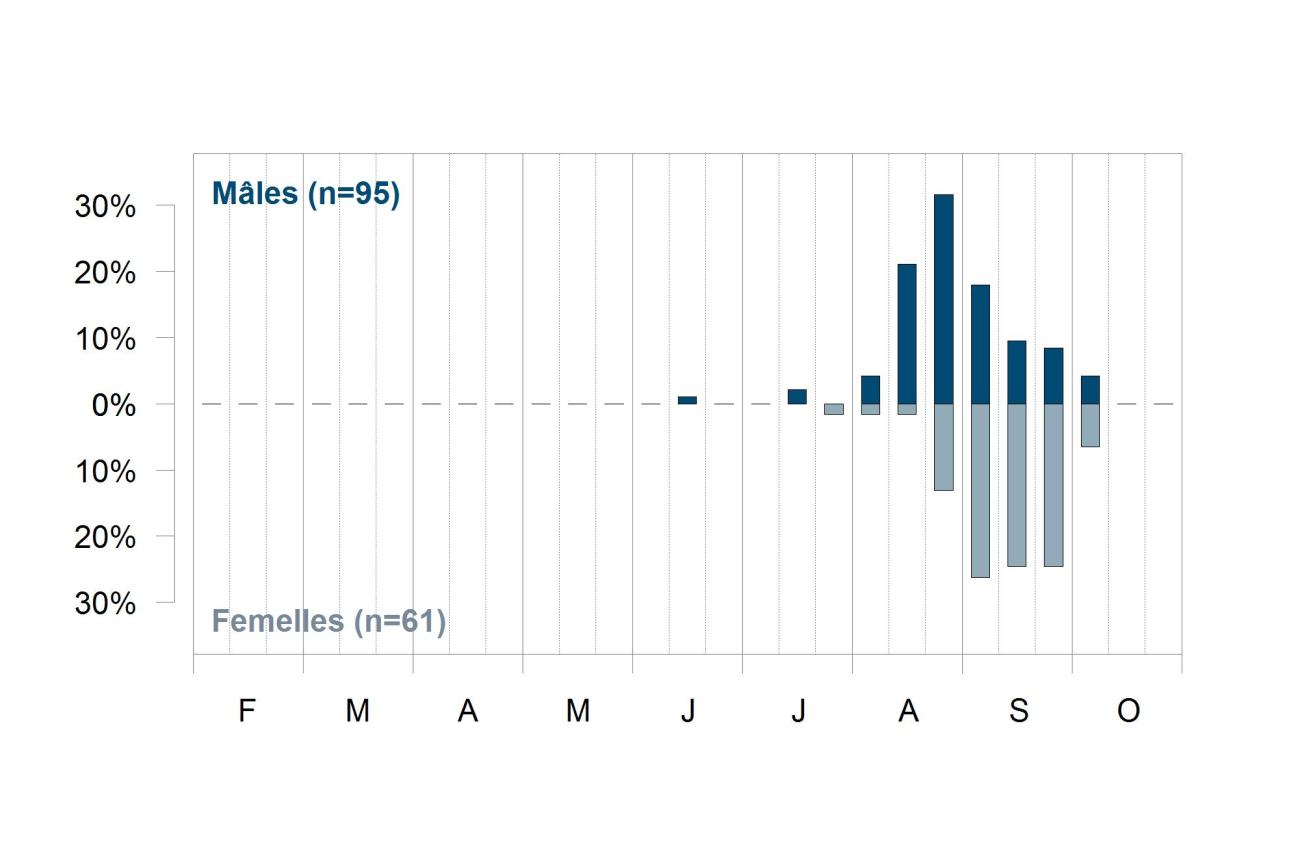
Phénologie de Colletes hederae en Suisse.
Distribution
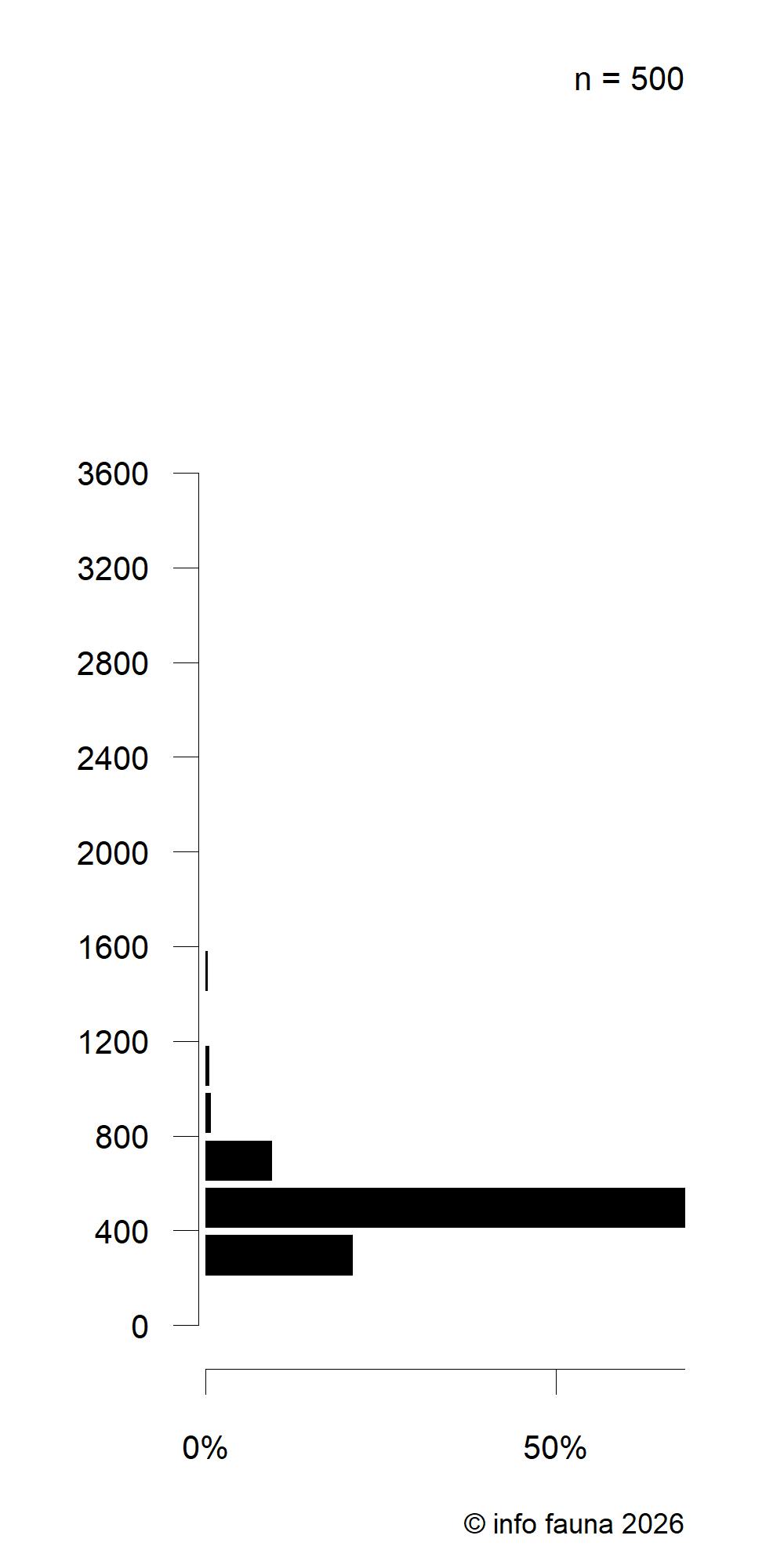
Au cours des 25 dernières années, C. hederae a colonisé de manière explosive de grandes parties de l'Europe centrale et du sud de l'Angleterre à partir de la région méditerranéenne. L’espèce se propage actuellement plus au nord et à l'est. Une étude génétique a montré que cette propagation n'est probablement pas due à une immigration répétée d'individus isolés suivie d'une rapide croissance de population, mais plutôt par un taux de migration élevé avec une dispersion continue de l’espèce à grande échelle (Dellicour et al., 2013). Alors qu'il n'y avait, avant 2000, que des signalements très isolés de C. hederae en Suisse dans la région du Léman, du Valais et du Tessin, l'espèce s'est depuis fortement répandue du sud-ouest vers le nord. Une première observation de l’espèce au nord-est a été effectuée dans le canton des Grisons en 2012. Aujourd'hui, C. hederae colonise une grande partie de la Suisse, mais ne monte guère au-dessus de 800 m, à l'exception du Valais où les mentions les plus élevées sont à 1400 m. C. hederae est une espèce commune (Dellicour et al., 2013)

Distribution altitudinale de Colletes hederae en Suisse.
Conservation
Cette page n'a malheureusement pas été traduite dans la langue sélectionnée. Elle s'affiche dans la langue de l'auteur.
Bedrohungstatus
Colletes hederae wird in der Roten Liste als nicht bedroht (LC) eingestuft (Müller & Praz 2024). Damit gehört sie nicht zu den gefährdeten Arten und ist keine Rote Liste Art.