
Type de présence en Suisse
Indigène (INN)
ⓘⓧ
Degré de menace
Selon les Catégories et Critères de la Liste rouge de l’UICN ou selon Duelli et al. 1994.
(exp = appréciation d'expert·e·s)
Statut de protection (CH)
Selon les lois et ordonnances nationales spécifiques.
Degré de menace (CH)
Non menacé (LC)
Statut de protection (CH)
ⓘⓧ
Selon les lois et ordonnances mentionnées
–
Lois et ordonnances
–
ⓘⓧ
Selon l’aide à l’exécution : Liste des espèces prioritaires au niveau national.
Priorité nationale
–
Niveau d’action
–
Indications sur le niveau d’action
–
Urgence des mesures (CH)
–
Protection d’occurrences individuelles
–
Surveillance des populations
–
ⓘⓧ
Domaine agricole (OEA/UZL)
Espèce cible/caractéristique selon : Objectifs environnementaux pour l’agriculture "Espèces et milieux naturels".
(* = appréciation d'expert·e·s)
Forêts
2 : Espèce cible forestière selon Biodiversité en forêt : objectifs et mesures. Aide à l’exécution pour la conservation de la diversité biologique dans la forêt suisse (Imesch et al. 2015).
1 : Espèce cible forestière complémentaire, définie dans le cadre de plans d'actions OFEV (p.ex. Plan d'action Forêts claires).
Domaine agricole (OEA/UZL)
–
Forêts
–
✓
Taxon bien étudié, graphique proche de la situation réelle plus d'info
Carte
Carte des observations de Andrena fulva en Suisse (résolution 5x5 km).Voir la carte
Période
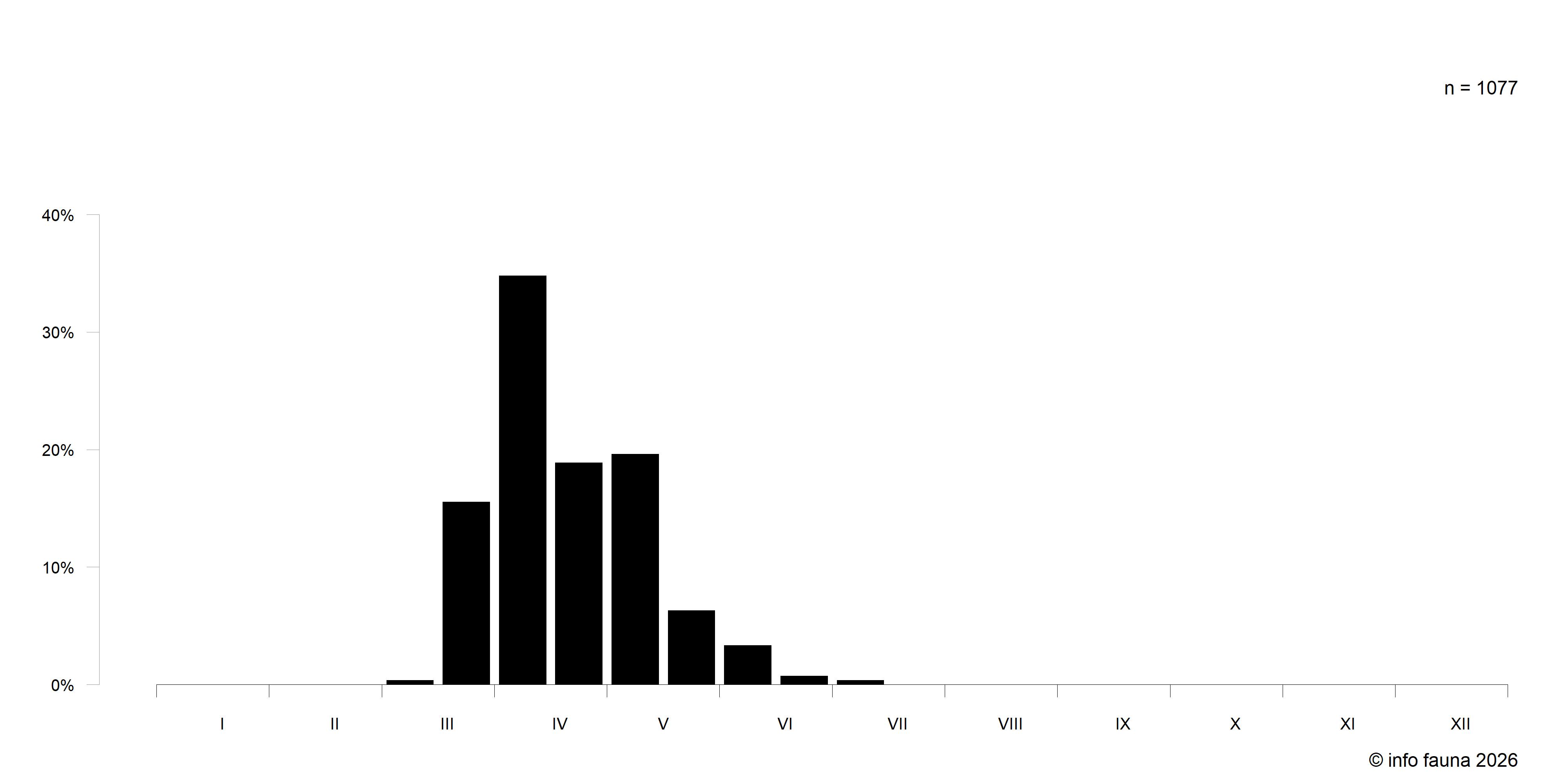
Période des observations de Andrena fulva en Suisse. Le graphique montre la proportion de toutes les observations par quinzaine.
Classification
- Arthropoda (Phylum)
- Insecta (Classe)
- Hymenoptera (Ordre)
- Apidae, Andreninae (Famille)
- Andrena (Genre)
- Apidae, Andreninae (Famille)
- Hymenoptera (Ordre)
- Insecta (Classe)
Portrait de l'espèce
Auteur-e-s
Andreas Müller
Portrait
Description et taxonomie
Andrena fulva est une espèce de grande taille (12-14 mm) dont les femelles sont reconnaissables sur le terrain grâce à leur pilosité rouge-orange vif sur les spécimens frais, mais gris-brunâtre sur la face supérieure du thorax et de l'abdomen et noir profond sur le reste du corps lorsque l’individu est défraichi.

Femelle sur Vaccinium myrtillus (Arcegno TI, début avril 2017). Photo © Dimitri Bénon.
Les mâles mesurent 9-12 mm et ne peuvent être distingués des espèces similaires qu'à l’aide d’une loupe binoculaire.

Les mâles d'A. fulva ont des mandibules très développées possédant une petite dent à leur base. Photo © Sophie Giriens.
Biologie et habitat
Habitat
Andrena fulva est plus commune dans les zones urbaines, mais on la trouve aussi régulièrement en bordure des forêts et des haies et dans les bois clairsemés. L'espèce colonise également les gravières, les digues de rivières et les vignobles, à condition de disposer d'un grand nombre d'arbustes et d'arbres à fleurs.
Sources de pollen
A. fulva est clairement polylectique. Jusqu'à présent, des représentants de 20 familles de plantes ont été identifiés comme des sources de pollen probables ou certaines : Aceraceae (Acer), Adoxaceae (Viburnum), Apiaceae, Aquifoliaceae (Ilex), Asteraceae (par ex. Taraxacum), Berberidaceae (Berberis), Brassicaceae (par ex. Alliaria, Brassica), Buxaceae (Buxus), Celastraceae (Euonymus), Ericaceae (Vaccinium), Euphorbiaceae (Euphorbia), Fagaceae (Fagus, Quercus), Grossulariaceae (Ribes), Liliaceae (par ex., Erythronium), Papaveraceae (Corydalis), Ranunculaceae (Helleborus, Ranunculus), Rhamnaceae (Frangula, Rhamnus), Rosaceae (par ex. Amelanchier, Cotoneaster, Crataegus, Malus, Potentilla, Prunus), Salicaceae (Salix) et Sapindaceae (Aesculus). Comme de nombreuses autres espèces du sous-genre Andrena, A. fulva montre une préférence marquée pour le pollen des arbustes et des arbres, notamment Acer, Prunus et Ribes dont elle est très friande et qu’elle visite fréquemment. Les vols de collecte de pollen durent en moyenne 60 minutes, mais ils peuvent se prolonger jusqu'à 100 minutes. Les retours au nid entre deux vols de collecte successifs durent en moyenne 30 minutes. Pas plus de cinq vols de collecte ne sont effectués par jour, même lorsque les conditions sont favorables (Stöckhert 1933, Pittioni & Schmidt 1943, Chambers 1968, Dylewska 1987, Westrich 1989, O'Toole & Raw 1991, Paxton 1991, Falk & Lewington 2015, Wood & Roberts 2017).

Femelle sur Ribes × nidigrolaria (Agasul ZH, 1991) Photo © Albert Krebs.
Nidification
A. fulva construit ses nids dans des galeries qu’elle creuse dans le sol, réutilisant parfois les anciennes galeries de l'année précédente.

Entrée d’un nid (Effretikon ZH, 1997). Photo © Albert Krebs.
L'espèce niche en solitaire ou en agrégation de petite à grande taille sur des sites nus ou à végétation éparse, ensoleillés ou semi-ombragés. Les colonies peuvent être occupées pendant plusieurs décennies, comprendre plusieurs centaines de nids et atteindre une densité allant jusqu'à 50 nids par mètre carré. Les sites de nidification sont souvent situés sur les chemins et les bords de route, les terrains perturbés et les bordures abruptes dans les prairies et sur les talus, les bordures de champ, les pelouses ou les parterres de jardin. La galerie principale plus ou moins verticale du nid atteint une profondeur maximale de 20-55 cm. À son extrémité, la première cellule à couvain est créée. Deux à trois jours sont nécessaires pour creuser la galerie principale ainsi que la première cellule à couvain. Après la fermeture de la première cellule, d'autres cellules à couvain sont créées dans la zone inférieure de la galerie principale, chacune d'entre elles étant située individuellement à l'extrémité de passages latéraux de plusieurs centimètres de long. Après la fermeture de la cellule à couvain, les passages latéraux sont grossièrement scellés avec de la terre. Bien que les femelles construisent régulièrement deux ou même trois nids, chacun d’eux ne contient que quatre à cinq cellules à couvain au maximum. Pour l'approvisionnement d'une cellule à couvain, huit à dix vols de collecte sont nécessaires (Kocourek 1966, Westrich 1989, Paxton 1991, Banaszak 1994, Falk & Lewington 2015).

Femelle quittant son nid (Effretikon ZH, 1997). Photo © Albert Krebs.
Espèces parasites
A. fulva est parasitée par les abeilles-coucou Nomada signata et N. panzeri. Dans une agrégation de nids examinée, près de 18% des cellules à couvain étaient parasitées par N. panzeri (Paxton & Pohl, 1999). Parmi les autres parasites alimentaires connus, il y a les mouches Leucophora obtusa et L. personata (Anthomyiidae). Le bombyle Bombylius major (Bombyliidae) a été signalé comme étant un parasitoïde de l’espèce. Les adultes d’A. fulva sont occasionnellement parasités également par des strepsiptères (par exemple Stylops nevinsoni) (Westrich 1989, Banaszak 1994, Paxton & Pohl 1999, Falk & Lewington 2015, Straka et al. 2015).
Comportement de reproduction
Les mâles à la recherche de femelles prêtes à s'accoupler se déplacent en essaim à quelques centimètres au-dessus des sites de nidification ou suivent des trajectoires de vol marquées par leur odeur le long des arbres et des buissons à des hauteurs allant de quelques mètres à plusieurs mètres. Les trajectoires de vol individuelles de plusieurs mâles se croisent souvent sans qu'il y ait d'interactions agressives entre eux. Les femelles suivent les trajectoires de vol des mâles sur de plus courtes distances et font des pauses régulières durant lesquelles l'accouplement a lieu. Ainsi par exemple pendant un quart d'heure, pas moins de 6 accouplements ont pu être observés au même endroit le long d'une haie où de nombreux mâles volaient alentours (Haas 1960, O'Toole & Raw 1991, Paxton 1991, Banaszak 1994).
Distribution
Cycle de vie
Andrena fulva a besoin d'environ trois mois pour passer de l'œuf à l'insecte pleinement développé. L’espèce passe l’hiver sous forme d'imago dans la cellule à couvain et produit une génération par an. La période de vol principale des mâles s'étend de la mi-mars à la fin avril, celle des femelles de la fin mars à la mi-mai. Bien que les premiers mâles n'éclosent que un à deux jours avant les premières femelles, le pic d'éclosion des mâles précède largement celui des femelles. La durée totale de vol des mâles n'est que d'environ trois semaines, alors que celle des femelles est d'environ cinq semaines (Paxton 1991, Banaszak 1994, Westrich 1989).
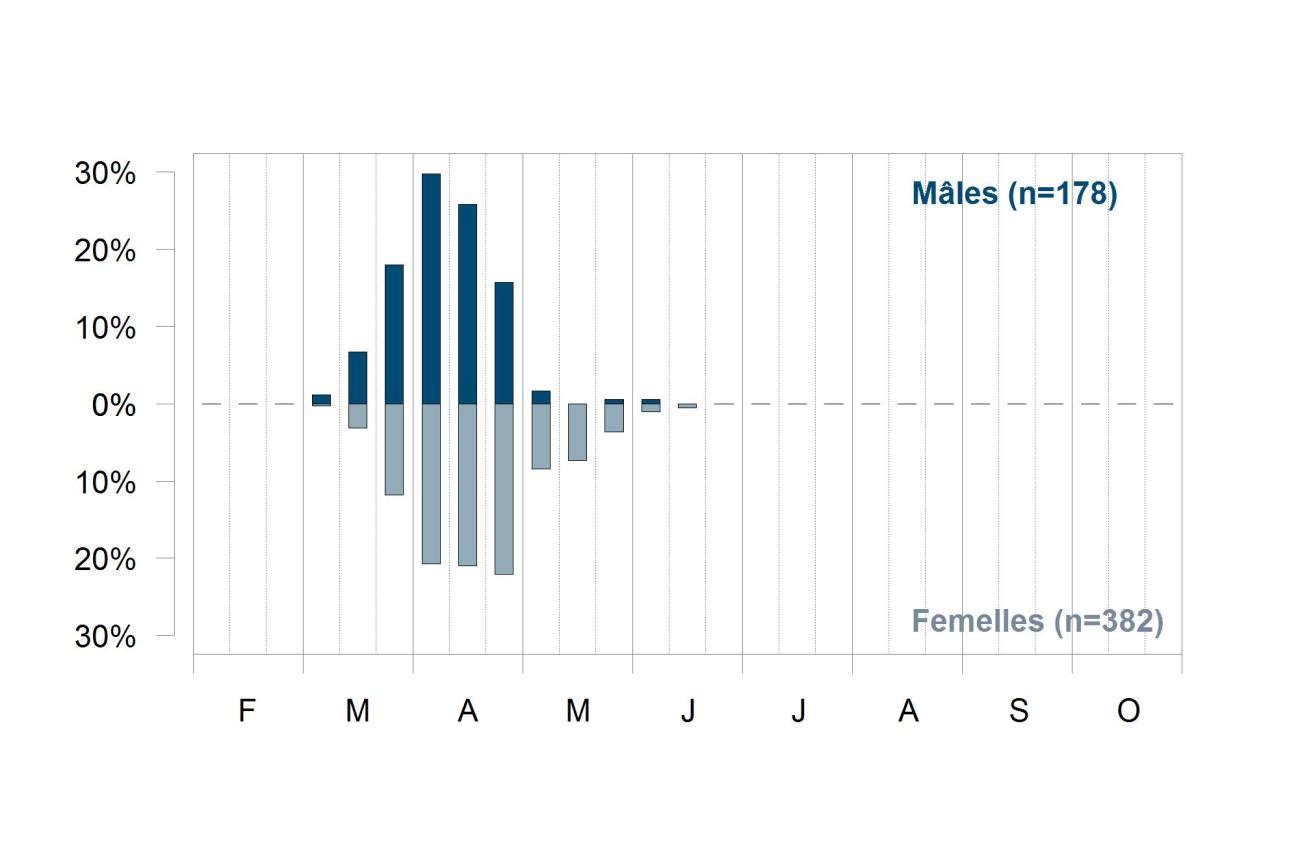
Phénologie d’Andrena fulva en Suisse.
Distribution
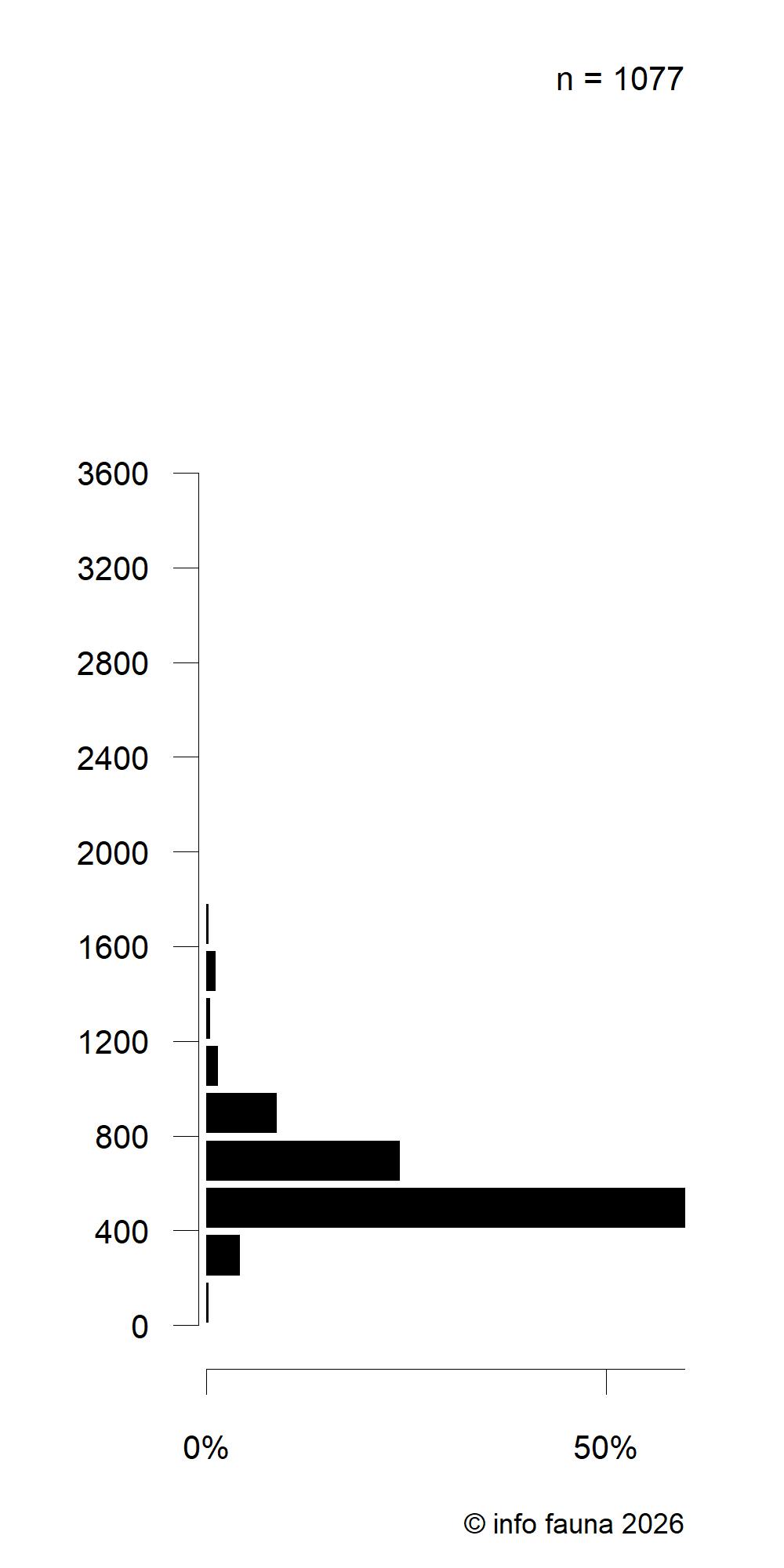
A. fulva est distribuée dans toute la Suisse, mais elle est absente dans de grandes parties du versant nord des Alpes et des Grisons. L'espèce est présente de basse altitude jusqu'à 900 m, seules quelques observations ont été réalisées à des altitudes plus élevées. A. fulva est répandue et par endroits même fréquente.

Distribution altitudinale d’Andrena fulva en Suisse.
Conservation
Cette page n'a malheureusement pas été traduite dans la langue sélectionnée. Elle s'affiche dans la langue de l'auteur.
Bedrohungsstatus
Andrena fulva wird in der Roten Liste als nicht bedroht (LC) eingestuft (Müller & Praz 2024). Damit gehört sie nicht zu den gefährdeten Arten und ist keine Rote Liste Art.