
Tipo di presenza in Svizzera
Indigena (INN)
ⓘⓧ
Grado di minaccia
Secondo le Categorie e i criteri della Lista Rossa dell’UICN o secondo Duelli et al. 1994.
(exp = valutazione degli/delle esperti/e)
Status di protezione (CH)
Ai sensi delle leggi e alle ordinanze nazionali specifiche.
Grado di minaccia (CH)
Non minacciato (LC)
Status di protezione (CH)
ⓘⓧ
Ai sensi delle leggi e delle ordinanze citate
–
Leggi e Ordinanze
–
ⓘⓧ
Secondo l’aiuto all’esecuzione: Lista delle specie prioritarie a livello nazionale della Svizzera.
Priorità nazionale
–
Livelli operativi
–
Indicazioni sul livello operativo
–
Urgenza temporale con cui attuare (CH)
–
Protezione popolazioni isolate
–
Monitoraggio delle popolazioni
–
ⓘⓧ
Settore agricolo (OEA/UZL)
Specie bersaglio/caratteristiche secondo: Obiettivi ambientali per l’agricoltura “Specie e habitat”.
(* = valutazione degli/delle esperti/e)
Foreste
2: Specie forestale bersaglio secondo: Biodiversität und Wald: Ziele und Massnahmen. Vollzugshilfe zur Erhaltung und Förderung der biologischen Vielfalt im Schweizer Wald (Imesch et al. 2015).
1: Specie forestale bersaglio complementare, definita nell’ambito dei piani d’azione UFAM (ad es. Piano d’azione Boschi radi FR/DE)
Settore agricolo (OEA/UZL)
–
Foreste
–
✓
Taxon ben studiato, mappa vicina alla distribuzione reale Maggiori informazioni
Mappa
Mappa delle osservazioni di Panurgus banksianus in Svizzera (risoluzione 5x5 km).Visualizza la mappa
Periodo
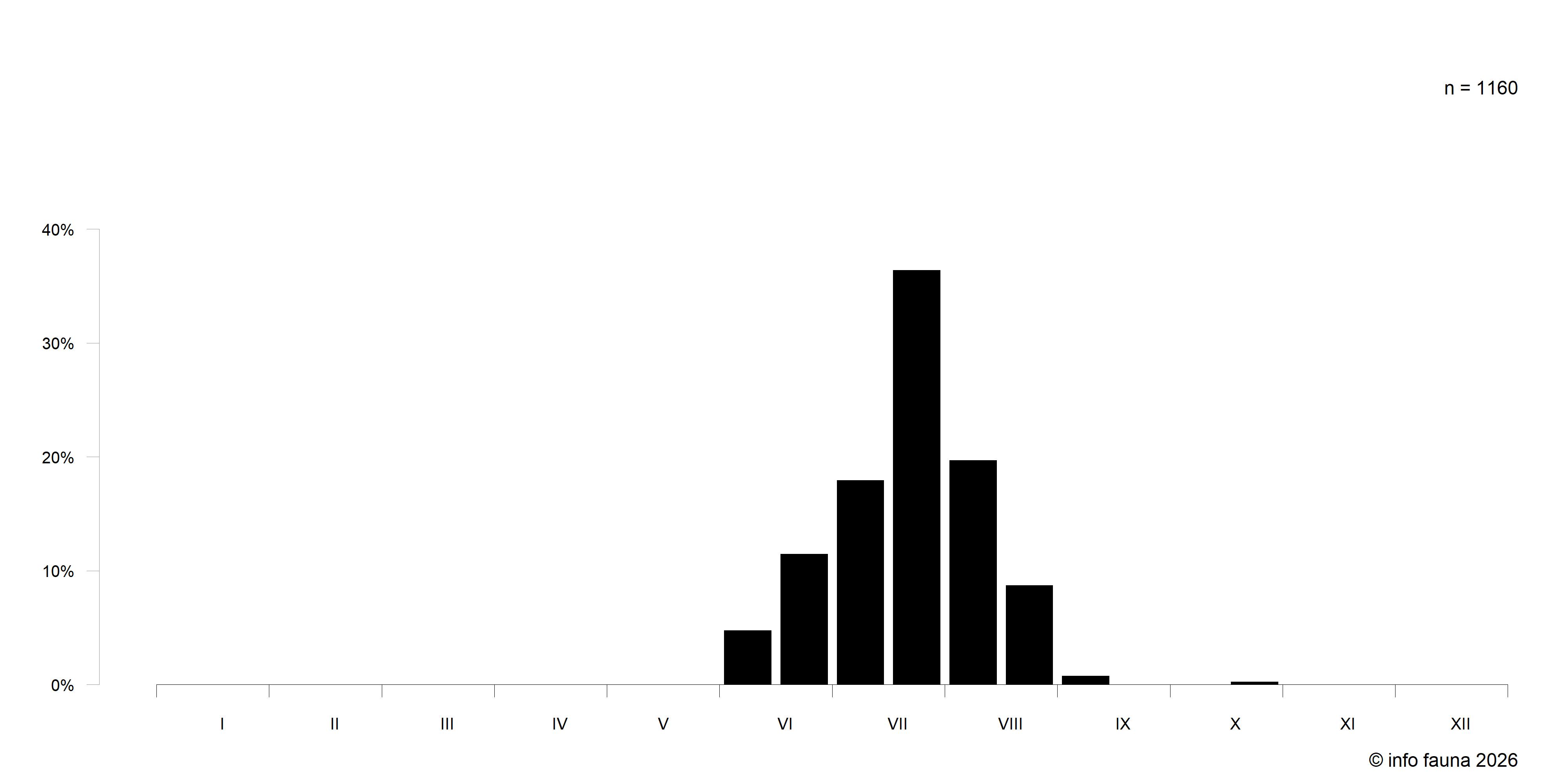
Periodo delle osservazioni di Panurgus banksianus in Svizzera. Il grafico mostra la proporzione di tutte le osservazioni per quindicina.
Classificazione
- Arthropoda (Phylum)
- Insecta (Classe)
- Hymenoptera (Ordine)
- Apidae, Andreninae (Famiglia)
- Panurgus (Genere)
- Apidae, Andreninae (Famiglia)
- Hymenoptera (Ordine)
- Insecta (Classe)
Ritratto della specie
Auteur-e-s
Andreas Müller
Ritratto
Description et taxonomie
Panurgus banksianus est une espèce de taille moyenne (10-12 mm), de couleur noir brillant portant une pilosité noire hirsute. Comme chez les autres espèces de Panurgus, les femelles possèdent sur les pattes une scopa dense dans laquelle le pollen sec est transporté et les mâles se distinguent par leur tête large de forme cubique. P. banksianus diffère des deux autres espèces indigènes de Panurgus par sa taille plus importante, sa scopa de couleur plus orange-jaune et l'absence d'appendices sur les pattes postérieures des mâles. Cette dernière caractéristique n'est toutefois visible que lorsque les individus sont examinés à la main.

Toutes les espèces du genre nichent dans le sol. Ici, une femelle de Panurgus banksianus rentrant au nid après un vol de récolte (Val Piora TI, juillet 1996). Photo © Andreas Müller.
Biologia e habitat
Habitat
Panurgus banksianus colonise une large gamme d'habitats riches en Cichorioideae et présentant des sols meubles. L'espèce est présente sur les côteaux et les prairies riches en fleurs, sur les pâturages extensifs, dans les clairières et les lisières de forêts ; à plus basse altitude, elle colonise également les surfaces rudérales sableuses et les zones d’exploitation minière.
Sources de pollen
P. banksianus est oligolectique et ne collecte du pollen que sur les Asteraceae et plus précisément exclusivement sur des représentants des Cichorioideae (par ex. Cichorium, Crepis, Hieracium, Hypochaeris, Leontodon, Picris). Comme les capitules des Cichorioideae se referment déjà vers midi, les femelles ne peuvent passer que quelques heures par jour à collecter le pollen, même par beau temps. P. banksianus a un comportement caractéristique durant la récolte de pollen, rampant entre les fleurs ligulées des plantes-hôtes dans une position latérale et ramassant le pollen dans la scopa par des mouvements de flexion et de contraction. Une étude danoise a montré qu’une colonie de 170 femelles de P. banksianus dépendait, pour sa survie à long terme, d'environ 8000 plantes d'Hypochaeris radicata (Münster-Swendsen, 1968). Pour approvisionner une cellule à couvain en pollen d’Hypochaeris, l’espèce réalise huit vols de collecte, ce qui lui prend une journée par beau temps. Des femelles collectrices de pollen ont été observées à des distances allant jusqu'à 300 m de leur site de nidification (Münster-Swendsen 1968, 1970, Peeters et al. 2012, Falk & Lewington 2015, Else & Edwards 2018, Westrich 2018).
Nidification
P. banksianus installe ses nids dans des galeries qu’elle creuse dans un sol nu ou à végétation clairsemée, généralement plus ou moins sableux et souvent assez compact, par exemple sur ou au bord de chemins non goudronnés, dans des escarpements et des talus ou dans des prairies et des pâturages à végétation clairsemée. L'espèce niche généralement en agrégations plus ou moins grandes, qui peuvent comprendre jusqu'à plusieurs centaines de nids. Bien qu'il existe des observations isolées de deux femelles utilisant la même entrée de nid (O'Toole in Münster-Swendsen, 1970), P. banksianus est généralement solitaire. Les nids de P. banksianus sont uniques en leur genre car ils possèdent deux, voire trois entrées. Après avoir sélectionné un site de nidification favorable, les femelles creusent d'abord un passage en forme d'arc, d'une profondeur moyenne de 4 cm, qui débouche vers l’extérieur à une distance maximale de 25 cm de la première entrée. Les particules de sol excavées sont repoussées dans le sens inverse du creusage et s'accumule autour de la première entrée sous la forme d'un petit volcan. La deuxième entrée, en revanche, reste libre de tout matériau excavé et sert dès lors d'entrée principale du nid. Une fois cette première galerie terminée, en partant de son point le plus profond, les femelles creusent une autre galerie vers le bas d'une longueur maximale de 10 cm à l'extrémité de laquelle une cellule à couvain est construite. Les particules de sol de cette deuxième opération sont poussées en direction de la première entrée qui est ensuite bouchée. Après avoir fermé la première cellule à couvain avec un couvercle en terre, les femelles creusent une deuxième galerie de cellule à couvain dans la zone supérieure de la première galerie. Cette deuxième galerie est dirigée en diagonale vers le bas et se termine par une autre cellule à couvain. La terre obtenue est utilisée pour remplir la partie inférieure de la première galerie de cellules à couvain. Après la fermeture de la deuxième cellule, de nouvelles galeries avec chacune une cellule à couvain sont continuellement édifiées - toujours à partir de la dernière galerie creusée - de sorte qu'un nid ramifié de façon dichotomique se développe avec des galeries de plus en plus courtes. Au fur et à mesure que le nombre de cellules à couvain augmente, il devient de plus en plus difficile de déposer la terre excavée dans les galeries plus courtes. Elle est donc dégagée de plus en plus hors du nid par la deuxième entrée, ce qui finit par la bloquer. Par conséquent, dans les nids plus étendus, les femelles creusent souvent un court passage entre la partie non remplie de l'arcade initiale et la surface du sol, de sorte qu'une troisième entrée du nid est créée à une distance de 2-6 cm de la deuxième entrée. Ce troisième accès sert désormais de nouvelle entrée du nid. Les entrées du nid sont fermées de l'intérieur après le dernier vol de la journée ou en cas de mauvais temps. Un nid de P. banksianus terminé contient entre quatre et dix cellules à couvain tapissées d'une sécrétion et qui se trouvent au final à 6-14 cm sous la surface du sol. Contrairement à la plupart des autres espèces d'abeilles, les femelles de P. banksianus déposent d'abord le pollen de manière lâche dans la cellule de couvain et ne le forment en boule solide qu'après avoir introduit toute la nourriture. Les larves éclosent après environ trois jours et consomment le pollen et le nectar en un peu moins de deux semaines. La durée du stade nymphal dépend de la température et dure 17 jours à 22° C et 11 jours à 30° C (Micheli 1931, Nielsen 1934, Münster-Swendsen 1968, 1970, Peeters et al. 2012, Else & Edwards 2018, Westrich 2018).

Site de nidification de Panurgus banksianus à 2100 m d'altitude (Vispterminen VS, fin juillet 2018). Photo © Sophie Giriens.
Espèces parasites
P. banksianus est parasitée par l'abeille-coucou Nomada similis. Le diptère Miltogramma punctatum (Sarcophagidae) a été signalé également comme parasite alimentaire (Else & Edwards 2018, Westrich 2018).
Comportement de reproduction
À la recherche de femelles, les mâles font des allers-retours au-dessus des nids en un vol en zigzag lent, interrompu par des inspections régulières de l'entrée des nids à une hauteur de quelques centimètres. Ils peuvent également patrouiller autour des plantes hôtes le long de trajectoires individuelles. D'autres mâles attendent l'arrivée des femelles pendant des heures ou des jours sur les têtes de fleurs. Chez P. banksianus, la recherche de partenaire est effectuée à l’aide signaux visuels et olfactifs. Les expériences menées ont montré que les mâles réagissaient particulièrement bien à de faux individus jaune et noir, une combinaison de couleurs qui correspond à des femelles noires chargées de pollen jaune ou visitant des capitules jaunes. En outre, les femelles produisent des odeurs spécifiques à l'espèce et au sexe qui permettent aux mâles de les détecter à courte distance de manière fiable. Les mâles qui patrouillent se jettent aussi souvent sur d'autres mâles perchés sur des inflorescences jaunes dans l'intention de s'accoupler. Les mâles attaqués de cette manière signalent leur erreur aux mâles qui s'approchent en étendant vers eux toutes les pattes d'un côté de leur corps. En outre, la perception des odeurs spécifiques à l'espèce et au sexe empêche ainsi toute nouvelle tentative infructueuse d'accouplement. L'accouplement a lieu à la fois sur les sites de nidification au sol et sur les fleurs. Contrairement à la plupart des autres espèces d'abeilles indigènes, les femelles de P. banksianus s'accouplent plusieurs fois avec différents mâles et l'accouplement peut donc être observé pendant toute la période de vol. Les copulations durent 10-180 secondes et sont accompagnées de vibrations audibles des muscles de vol indirect du mâle. Ces vibrations sont susceptibles de fournir à la femelle des informations sur la qualité du mâle. Les mâles dorment dans de courts terriers ou sur les fleurs, notamment sur les capitules des Cichorioideae car ils se ferment pendant la nuit et les individus endormis sont ainsi bien protégés (Münster-Swendsen 1968, Meyer-Holzapfel 1984, Franke et al. 1987, Tengö et al. 1988, Weigand 2012).

Accouplement sur une fleur d'Asteraceae (Lago Ritom TI, mi-août 2020). Photo © Sophie Giriens.

En copulation (Saas Almagell GR, fin juillet 2023). Photo © Urs Weibel.
Distribuzione
Cycle de vie
Panurgus banksianus passe l’hiver au stade de larve au repos à l'intérieur de la cellule à couvain. L'espèce est univoltine et sa période de vol principale s'étend de début juin à début septembre (Micheli 1931, Münster-Swendsen 1968).
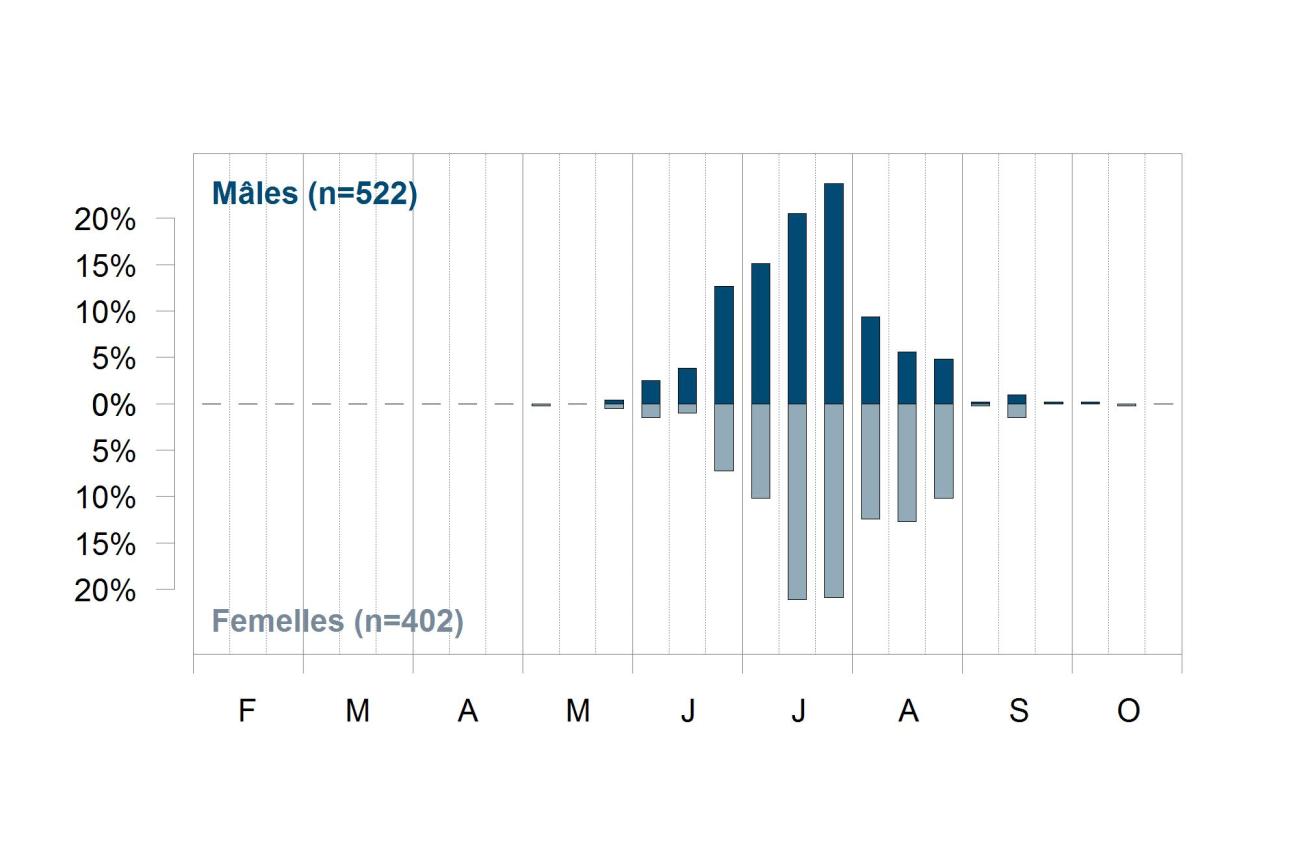
Phénologie de Panurgus banksianus en Suisse.
Distribution
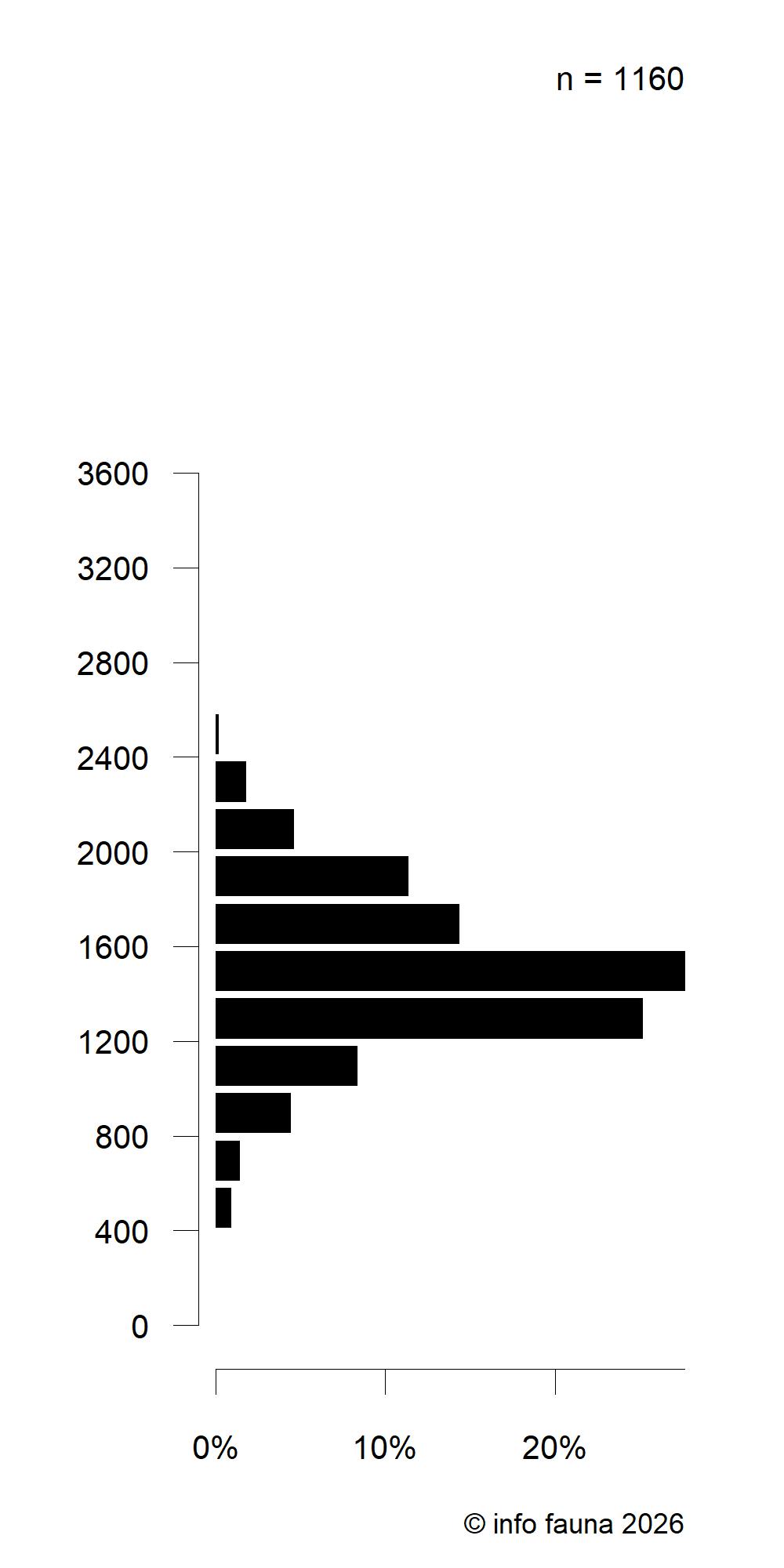
P. banksianus est distribuée dans toute la région alpine, bien qu’elle soit beaucoup plus rare sur le flanc nord que dans le reste des Alpes. Elle est également présente très localement dans l'ouest du Plateau. Les quelques mentions de l’espèce dans le Jura et la région de Bâle datent toutes de la fin du XIXe siècle. Comparée aux deux autres espèces indigènes de Panurgus, P. banksianus préfère des altitudes plus élevées et se rencontre habituellement entre 900 m à 2400 m, seules quelques observations plus hautes ou plus basses ont été réalisées. Il s’agit d’une abeille commune dans les Alpes, rare dans les autres régions.
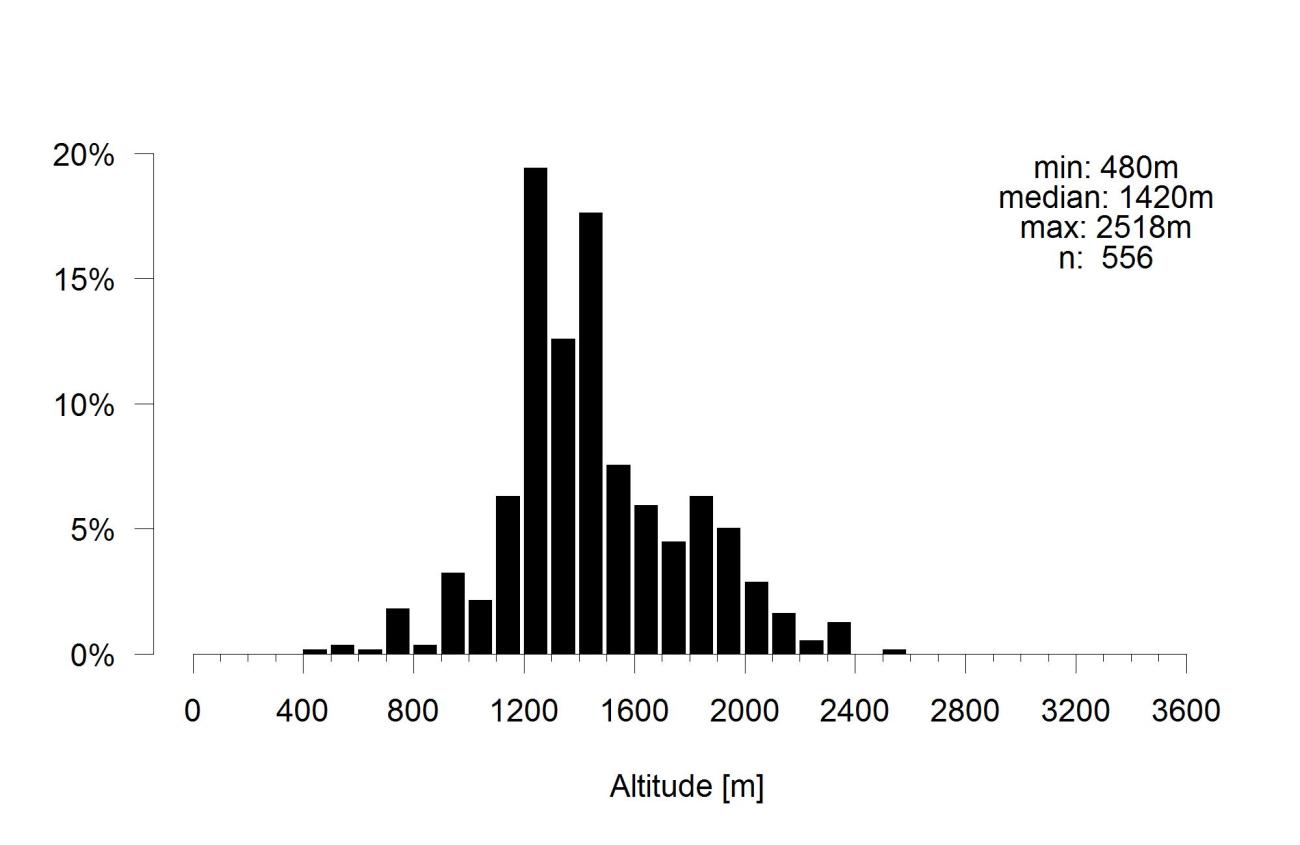
Distribution altitudinale de Panurgus banksianus en Suisse.
Conservazione
Cette page n'a malheureusement pas été traduite dans la langue sélectionnée. Elle s'affiche dans la langue de l'auteur.
Bedrohungstatus
Panurgus banksianus wird in der Roten Liste als nicht bedroht (LC) eingestuft (Müller & Praz 2024). Damit gehört sie nicht zu den gefährdeten Arten und ist keine Rote Liste Art.