Aller au contenu principal

Nomada panzeri s.l.

Lepeletier, 1841
Type de présence en Suisse

Indigène (INN)

Menaces et protection

Degré de menace
Selon les Catégories et Critères de la Liste rouge de l’UICN ou selon Duelli et al. 1994.
(exp = appréciation d'expert·e·s)

Statut de protection (CH)
Selon les lois et ordonnances nationales spécifiques.

Degré de menace (CH)

Non menacé (LC)

Statut de protection (CH)

Selon les lois et ordonnances mentionnées

Lois et ordonnances
Conservation

Selon l’aide à l’exécution : Liste des espèces prioritaires au niveau national.

Priorité nationale
Niveau d’action
Indications sur le niveau d’action
Urgence des mesures (CH)
Protection d’occurrences individuelles
Surveillance des populations
Espèce cible et écologie

Domaine agricole (OEA/UZL)
Espèce cible/caractéristique selon : Objectifs environnementaux pour l’agriculture "Espèces et milieux naturels"
(* = appréciation d'expert·e·s)

Forêts 
2 : Espèce cible forestière selon  Biodiversité en forêt : objectifs et mesures. Aide à l’exécution pour la conservation de la diversité biologique dans la forêt suisse (Imesch et al. 2015).
1 : Espèce cible forestière complémentaire, définie dans le cadre de plans d'actions OFEV (p.ex. Plan d'action Forêts claires).

Domaine agricole (OEA/UZL)
Forêts

    Taxon bien étudié, graphique proche de la situation réelle plus d'info

    Carte
    Nomada panzeri s.l.
    Carte des observations de Nomada panzeri s.l. en Suisse (résolution 5x5 km).Voir la carte
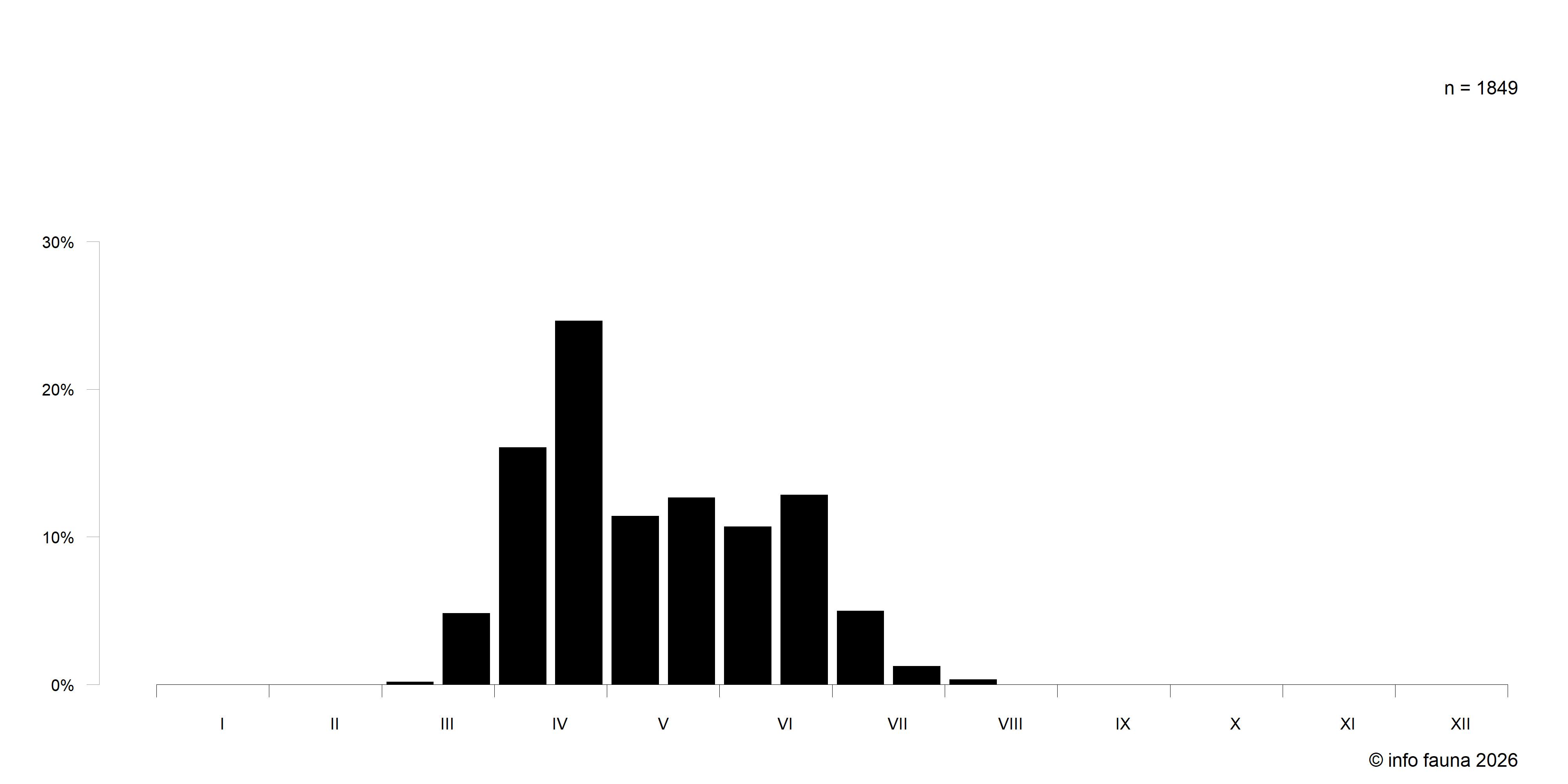
    Période des observations de Nomada panzeri s.l. en Suisse. Le graphique montre la proportion de toutes les observations par quinzaine.
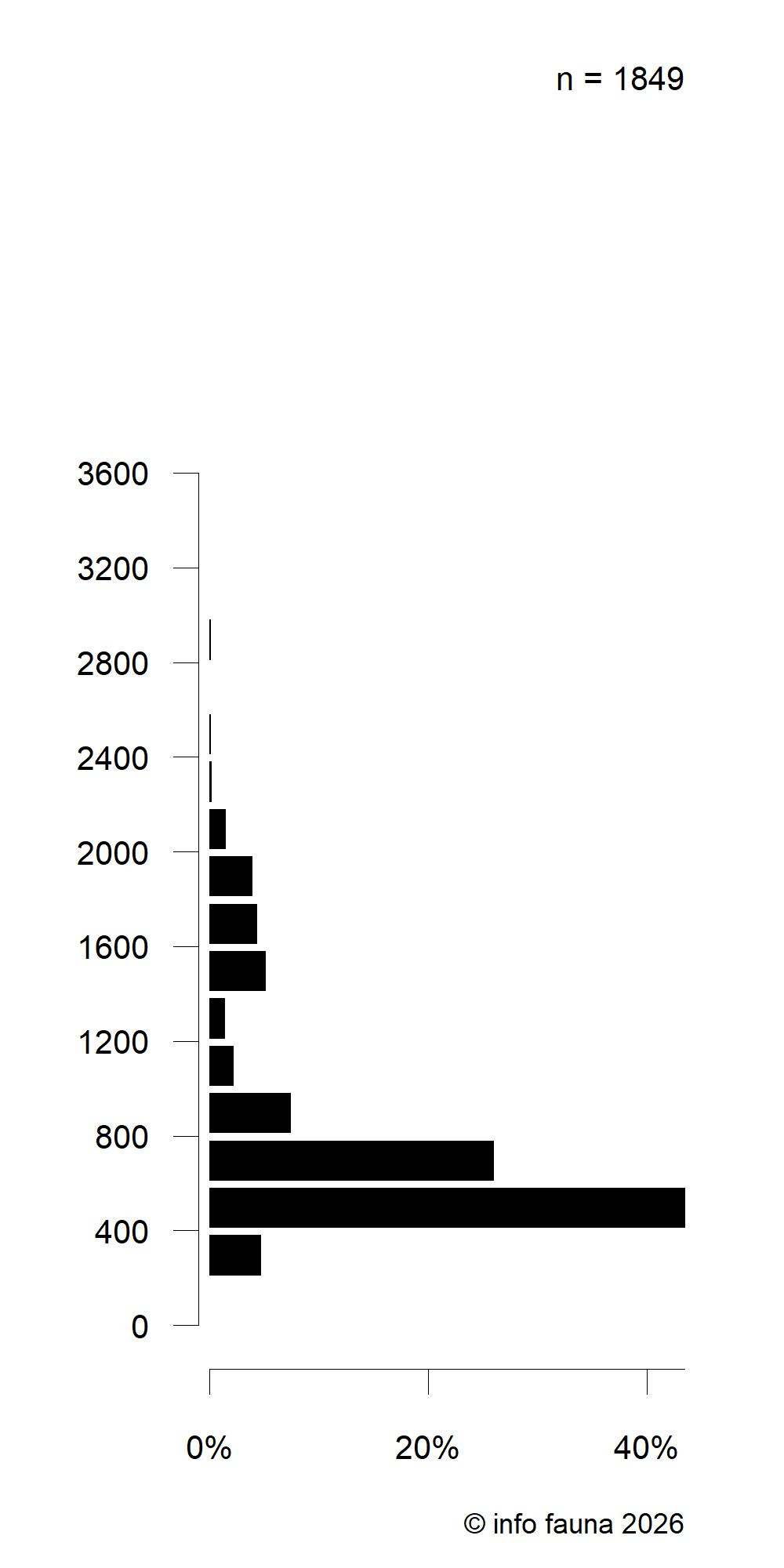
    Altitude des observations de Nomada panzeri s.l. en Suisse. Le graphique montre la proportion de toutes les observations par classe d'altitude de 200 m..

    Classification

    • Arthropoda (Phyllum)
      • Insecta (Classe)
        • Hymenoptera (Ordre)
          • Anthophorinae (Famille)
            • Nomada (Genre)

    Références bibliographiques

    Nomada flava Panzer
    Richards, O.W. (1946b). Nomada flava Panzer. Proceedings of the Royal Entomological Society of London, 15, 17-26.
    Observations on Bombus agrorum Fabricius (Hymen. Bombidae)
    Richards, O. W. (1946a). Observations on Bombus agrorum Fabricius (Hymen. Bombidae). Proceedings of the Royal Entomological Society of London, Series A, 21, 66-71.
    Die Bienen Frankens (Hym. Apid.)
    Stoeckhert, F.K. (1933). Die Bienen Frankens (Hym. Apid.). Eine ökologisch-tiergeographische Untersuchung. Beiheft Deutsche Entomologische Zeitschrift, 1932, 294p.
    Prodromus der Hymenopteren der Tschechoslowakei, Pars 9: Apoidea, 1
    Kocourek, M. (1966). Prodromus der Hymenopteren der Tschechoslowakei, Pars 9: Apoidea, 1. Acta faunistica Entomologica Musei Nationalis Pragae, 12, 1-122.
    Rote Liste der Bienen
    Müller, A., & Praz, C. (2024). Rote Liste der Bienen. Gefährdete Arten der Schweiz. Umwelt-Vollzug.
    A threefold plant specialist
    Müller, A., Weibel, U., & Lenz, R. (2024). A threefold plant specialist. Alpine Entomology 8, 131-146.
    Aktuelles zur Bienenfauna (Hymenoptera, Apidae) Sachsen-Anhalts und Deutschlands
    Burger, F., Meizel, T., Ruhnke, & H (2006). Aktuelles zur Bienenfauna (Hymenoptera, Apidae) Sachsen-Anhalts und Deutschlands. Entomologische Nachrichten und Berichte, 50, 129-133.
    Apidae 5: Ammobates, Ammobatoides, Anthophora, Biastes, Ceratina, Dasypoda, Epeoloides, Epeolus, Eucera, Macropis, Melecta, Melitta, Nomada, Pasites, Tetralonia, Thyreus, Xylocopa
    Amiet, F., Herrmann, M., Müller, A., & Neumeyer, R. (2007). Apidae 5: Ammobates, Ammobatoides, Anthophora, Biastes, Ceratina, Dasypoda, Epeoloides, Epeolus, Eucera, Macropis, Melecta, Melitta, Nomada, Pasites, Tetralonia, Thyreus, Xylocopa. Fauna Helvetica, Vol. 20, Centre Suisse de Cartographie de la Faune (CSCF)/Schweizerische Entomologische Gesellschaft (SEG), 357p.
    Eine neue Art der Andrena taraxaci-Gruppe
    Schwenninger, H. R. (2007). Eine neue Art der Andrena taraxaci-Gruppe. Linzer biologische Beiträge, 39(1), 637-650.
    Kritisches Verzeichnis und aktuelle Checkliste der Wildbienen Deutschlands (Hymenoptera, Anthophila) sowie Anmerkungen zur Gefährdung
    Scheuchl, E., & Schwenninger, H.R. (2015). Kritisches Verzeichnis und aktuelle Checkliste der Wildbienen Deutschlands (Hymenoptera, Anthophila) sowie Anmerkungen zur Gefährdung. Mitteilungen des Entomologischen Vereins Stuttgart, 50(1), 255p.
    DNA barcoding largely supports 250 years of classical taxonomy: identifications for Central European bees (Hymenoptera, Apoidea partim)
    Schmidt, S., Schmid-Egger, C., Morinière, J., Haszprunar, G., & Hebert, P.D.N. (2015). DNA barcoding largely supports 250 years of classical taxonomy: identifications for Central European bees (Hymenoptera, Apoidea partim). Molecular Ecology Resources, 15, 985-1000.
    The tawning mining bee, Andrena fulva (Müller) (Hymenoptera, Andrenidae), at a south Wales field site and ist associated organisms: Hymenoptera, Diptera, Nematoda and Strepsiptera.
    Paxton, R. J., & Pohl, H. (1999). The tawning mining bee, Andrena fulva (Müller) (Hymenoptera, Andrenidae), at a south Wales field site and ist associated organisms: Hymenoptera, Diptera, Nematoda and Strepsiptera. . British Journal of Entomology and Natural History, 12, 57-67.
    Effects of familiarity and nestmate number on social interactions in two communal bees, Andrena scotica and Panurgus calcaratus (Hymnoptera, Andrenidae)
    Paxton, R.J., Kukuk, P.F., & Tengö, J. (1999). Effects of familiarity and nestmate number on social interactions in two communal bees, Andrena scotica and Panurgus calcaratus (Hymnoptera, Andrenidae). Insectes Sociaux, 46, 109-118.