
Type de présence en Suisse
Indigène (INN)
ⓘⓧ
Degré de menace
Selon les Catégories et Critères de la Liste rouge de l’UICN ou selon Duelli et al. 1994.
(exp = appréciation d'expert·e·s)
Statut de protection (CH)
Selon les lois et ordonnances nationales spécifiques.
Degré de menace (CH)
En danger (EN)
Statut de protection (CH)
ⓘⓧ
Selon les lois et ordonnances mentionnées
–
Lois et ordonnances
–
ⓘⓧ
Selon l’aide à l’exécution : Liste des espèces prioritaires au niveau national.
Priorité nationale
Oui
Niveau d’action
AF(+LF+GL) : Conservation ciblée des espèces
Indications sur le niveau d’action
–
Urgence des mesures (CH)
1 : urgent
Protection d’occurrences individuelles
–
Surveillance des populations
1 : insuffisant
ⓘⓧ
Domaine agricole (OEA/UZL)
Espèce cible/caractéristique selon : Objectifs environnementaux pour l’agriculture "Espèces et milieux naturels".
(* = appréciation d'expert·e·s)
Forêts
2 : Espèce cible forestière selon Biodiversité en forêt : objectifs et mesures. Aide à l’exécution pour la conservation de la diversité biologique dans la forêt suisse (Imesch et al. 2015).
1 : Espèce cible forestière complémentaire, définie dans le cadre de plans d'actions OFEV (p.ex. Plan d'action Forêts claires).
Domaine agricole (OEA/UZL)
–
Forêts
–
✓
Taxon bien étudié, graphique proche de la situation réelle plus d'info
Carte
Carte des observations de Andrena agilissima en Suisse (résolution 5x5 km).Voir la carte
Période
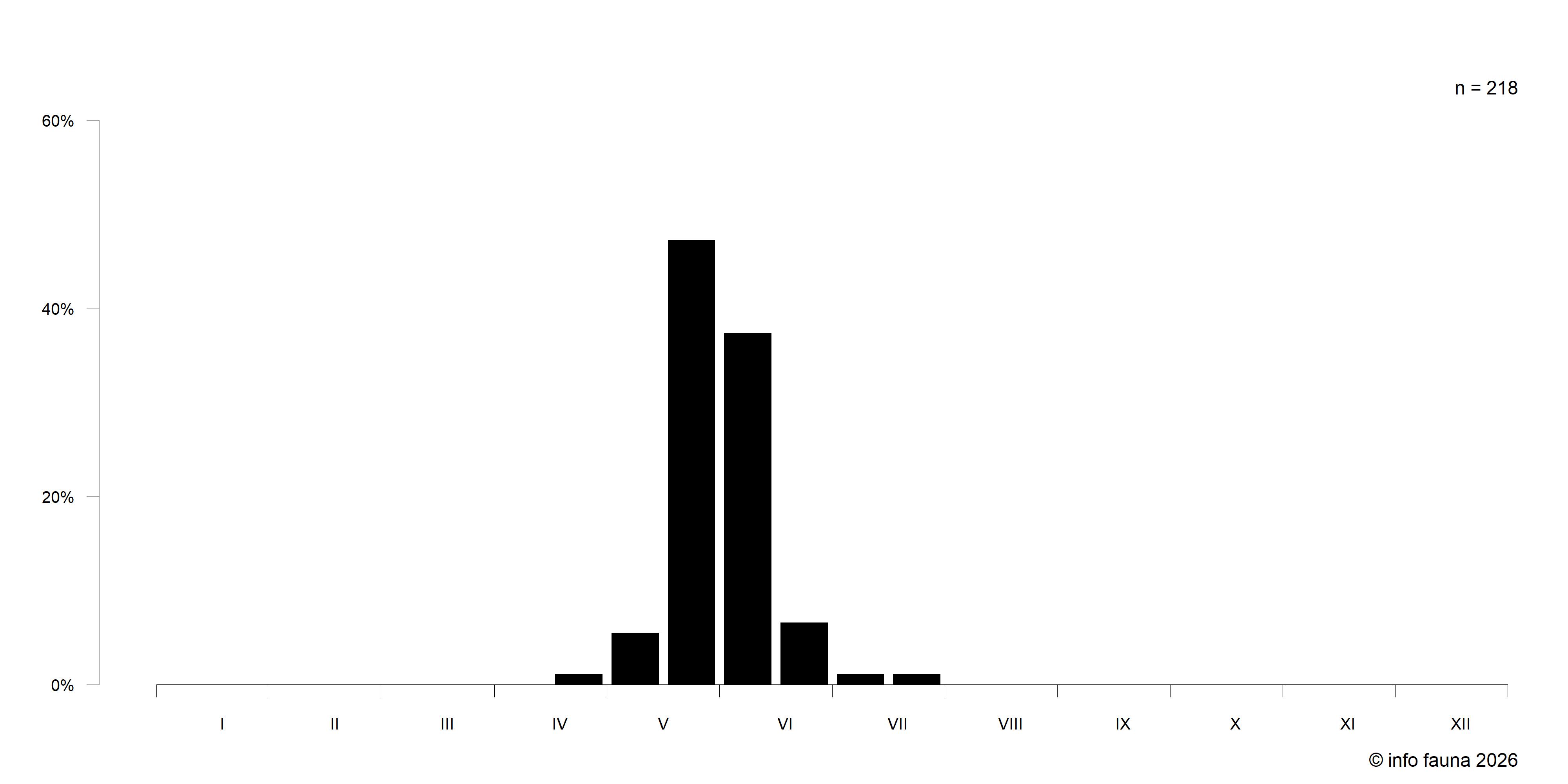
Période des observations de Andrena agilissima en Suisse. Le graphique montre la proportion de toutes les observations par quinzaine.
Classification
- Arthropoda (Phylum)
- Insecta (Classe)
- Hymenoptera (Ordre)
- Apidae, Andreninae (Famille)
- Andrena (Genre)
- Apidae, Andreninae (Famille)
- Hymenoptera (Ordre)
- Insecta (Classe)
Portrait de l'espèce
Auteur-e-s
André Rey
Portrait
Cette page n'a malheureusement pas été traduite dans la langue sélectionnée. Elle s'affiche dans la langue de l'auteur.
Feldkennzeichen
Die grossen, 13-15 mm langen Weibchen von Andrena agilissima lassen sich durch ihre Vorliebe für grossblütige Kreuzblütler in Kombination mit ihrem typischen Färbungsmuster bereits im Feld ansprechen. Beim Weibchen ist der ganze Körper glänzend schwarz mit schneeweissen Haarflecken auf dem Gesicht, den Thoraxseiten und seitlich an den letzten beiden Tergiten. Die Scopa ist weiss und hat oben wenige schwarze Haare; die Metatarsen sind schwarz behaart. Die Flügel sind stark verdunkelt und schillern zudem bläulich. Das Abdomen hat eine schwach glänzende Blaufärbung, im Gegensatz zur nah verwandten Art A. afrensis, welche zudem wenig ausgeprägte weisse Haarflecken auf den Tergiten hat. Dazu kommt, dass A. afrensis und A. agilissima zurzeit nicht sympatrisch vorkommen. Im Gegensatz zu A. cineraria und A. barbareae ist der Thorax bei A. agilissima oben ganz grauweiss behaart, ohne schwarze Querbinde. Bei A. pilipes fehlt die weisse Behaarung auf dem Gesicht und den Tergiten.

Weibchen auf Sinapis arvensis (Zürich ZH, Ende Mai 2022). Photo © André Rey.

Weibchen (Schaffhausen SH, Anfang Juni 2021). Photo © Urs Weibel.
Die Männchen von A. agilissima sind schlanker gebaut, aber den Weibchen ansonsten in Grösse und Form sehr ähnlich. Sie sind denjenigen von A. cineraria ähnlich, unterscheiden sich aber durch die dunkleren Flügel und die mindestens bei frischen Tieren schneeweisse Behaarung; bei A. cineraria sind die Flügel heller und die Behaarung grauweiss. Bei A. pilipes ist die Gesichtsbehaarung dunkel. Die nah verwandte A. afrensis unterscheidet sich wie beim Weibchen durch das schwarze Abdomen ohne Blauschiller. (Amiet et al 2010, Westrich 2018).

Männchen auf Sinapis arvensis (Schüpfen BE, Ende Mai 2016). Photo © Beatrice Scheidegger.

Männchen auf Sinapis arvensis (Flaach ZH, 1994). Photo © Albert Krebs.

Männchen auf Hesperis matronalis (Zürich ZH, Ende Mai 2022). Photo © André Rey.
Biologie et habitat
Cette page n'a malheureusement pas été traduite dans la langue sélectionnée. Elle s'affiche dans la langue de l'auteur.
Lebensraum
Andrena agilissima besiedelt strukturreiche dynamische Lebensräume wie Flussauen, Rebberge, Gruben, Ackerbaugebiete und Gartenareale mit
reichen Beständen an grossblütigen Kreuzblütlern. Zudem braucht die Art Steilwände oder Böschungen mit spärlicher Vegetation als Nistplatz. Nistplätze und Blütenressourcen können zum Teil weit auseinander liegen (siehe unten, Nahrungspflanzen). Diese Bindung an zwei Ressourcen, die sich zum Teil nicht am gleichen Standort befinden, stellt ein klassisches Beispiel der Abhängigkeit von Wildbienen an unterschiedliche "Teillebensräume"dar. Diese Abhängigkeit erklärt vermutlich den markanten Rückgang dieser Art, was auch für etliche weitere Wildbienenarten Mitteleuropas zutreffen dürfte. (Westrich 1996a, Amiet et al. 2010, Westrich 2018).

Lebensraum in einer ehemaligen Grube im Kanton Schaffhausen: kiesige Böschung mit viel Barbarakraut (Barbarea vulgaris) (Ramsen, Anfang Juni 2021). Photo © André Rey.


Lebensraum in einem Ackerbaugebiet in Zürich-Affoltern: oben Fluggebiete auf einer Buntbrache mit viel Ackersenf (oberes Foto) und einem mit Ackersenf verunkrauteter Kohlacker (unteres Bild) (Zürich, Ende Mai 2020). Photo © André Rey.
Nahrungspflanzen
Obwohl polylektisch sammelt A. agilissima bevorzugt auf grossblütigen Brassicaceae. Wie bei der nahe verwandten A. afrensis wird auch der Pollen von Resedaceae gesammelt (A. Müller, pers. Mitt.). Wichtigste Pollenquelle in der Nordschweiz ist Sinapis arvensis, genutzt werden aber auch Barbarea vulgaris, Brassica napus, Brassica rapa, Raphanus raphanistrum, Eruca versicaria, Hesperis matronalis. Raps wird oft als Pollenquelle genutzt, doch reicht diese Pflanze wegen der frühen Anbauzeit und der kurzen Blütezeit vermutlich nicht, um Populationen aufrechtzuerhalten. Mehrere pollensammelnde Weibchen wurden in bis zu 5 km Entfernung zu den Nestern beobachtet, was für Wildbienen außergewöhnlich weit ist. (Westrich 1996b, Polidori et al. 2005, Amiet et al. 2010, Westrich 2018, Dermane et al. 2021).

Gelegentlich sammeln die Weibchen von Andrena agilissima den Pollen auch auf Reseda (France, département de la Haute-Garonne, Ende Mai 2011). Photo © David Genoud.
Nistbiologie
Andrena agilissima legt die Nester in selbst gegrabenen Gängen in leicht grabbaren sandigen, lehmigen oder lössigen Steilwänden, Abbruchkanten und Böschungen an. Die Art nistet in Zentraleuropa meist in kleinen Aggregationen, in Südeuropa (und früher vermutlich auch in Mitteleuropa) in zum Teil sehr grossen Aggregationen mit hunderten von Weibchen. Die Nesteingänge werden zum Teil von mehreren Weibchen genutzt, wobei gewisse Weibchen immer den gleichen Eingang brauchen, andere verschiedene Eingänge, die sich im Inneren des Nestes vermutlich vereinen und wieder verzweigen. Jedes Weibchen verproviantiert höchstwahrscheinlich jedoch nur ihre eigene Brutzellen, wie bei anderen communalen Sandbienen wie A. carantonica. Die Gänge verzeigen sich im Innen und die Brutzellen befinden sich ungefähr 5-10 cm tief im Nest. (Giovanetti et al. 1999, 2003, Amiet et al 2010, Westrich 2018).
Parasiten
Die Nester werden von der Kuckucksbiene Nomada melathoracica parasitiert, eine Art die vermutlich sowohl mit A. agilissima als auch mit der nah verwandten A. afrensis assoziert ist. Nomada fulvicornis wird auch als Kukucksbiene von A. agilissima erwähnt; es ist nicht klar, ob diese Nomada Art bei uns auch bei A. agilissima parasitiert, oder ob nur die univoltine Form von Nomada fulvicornis (N. subcornuta, welche nach heutigem Kenntnisstand aus der Schweiz nicht bekannt ist) mit A. agilissima assoziert ist (Amiet et al 2010, Falk & Lewington 2015, Westrich 2018). Die Dipteren Leucophora personata, Bombylius fimbriatus, Zodion cinereum und Megaselia andrenae wurden auch als Parasiten von A. agilissima bestätigt. Die Parasitierungsraten durch diese Dipteren waren in einer Studie an einer grossen Nistaggregation in Südeuropa jedoch tief. Möglicherweise dient die kommunale Nistweise dieser Wildbienenart als Schutz gegen Parasiten. (Polidori et al. 2005).
Paarungsstrategie
Die Männchen paaren sich mit den Weibchen oft noch bevor diese ihre Nester verlassen haben, aber später auch regelmässig auf Wirtpflanzen. Im Gegensatz zu den meisten Wildbienenarten scheint A. agilissima polyandrisch zu sein, das heisst, dass die Weibchen sich vermutlich mit mehreren Männchen paaren können. Als indirekter Hinweis dazu sind Kopulationen regelmässig auch bei Pollen-sammelnden Weibchen zu beobachten, auch am Ende der Flugzeit. (Paxton et al. 1999).

Paarung von Andrena agilissima auf Sinapis arvensis (Flaach ZH, 1994). Photo © Albert Krebs.
Distribution
Cette page n'a malheureusement pas été traduite dans la langue sélectionnée. Elle s'affiche dans la langue de l'auteur.
Lebenszyklus
Andrena agilissima überwintert als Imago innerhalb der Brutzelle. Die Art bildet eine Generation pro Jahr aus. Im Gengensatz zu den meisten anderen Wildbienen- und Sandbienenarten schlüpfen Weibchen und Männchen zusammen und die Art ist nicht protandrisch (siehe "Paarungsstrategie"). Die Hauptflugzeit erstreckt sich für beide Geschlechte von Mitte Mai bis Ende Juni, selten später. (Amiet et al 2010, Westrich 2018).
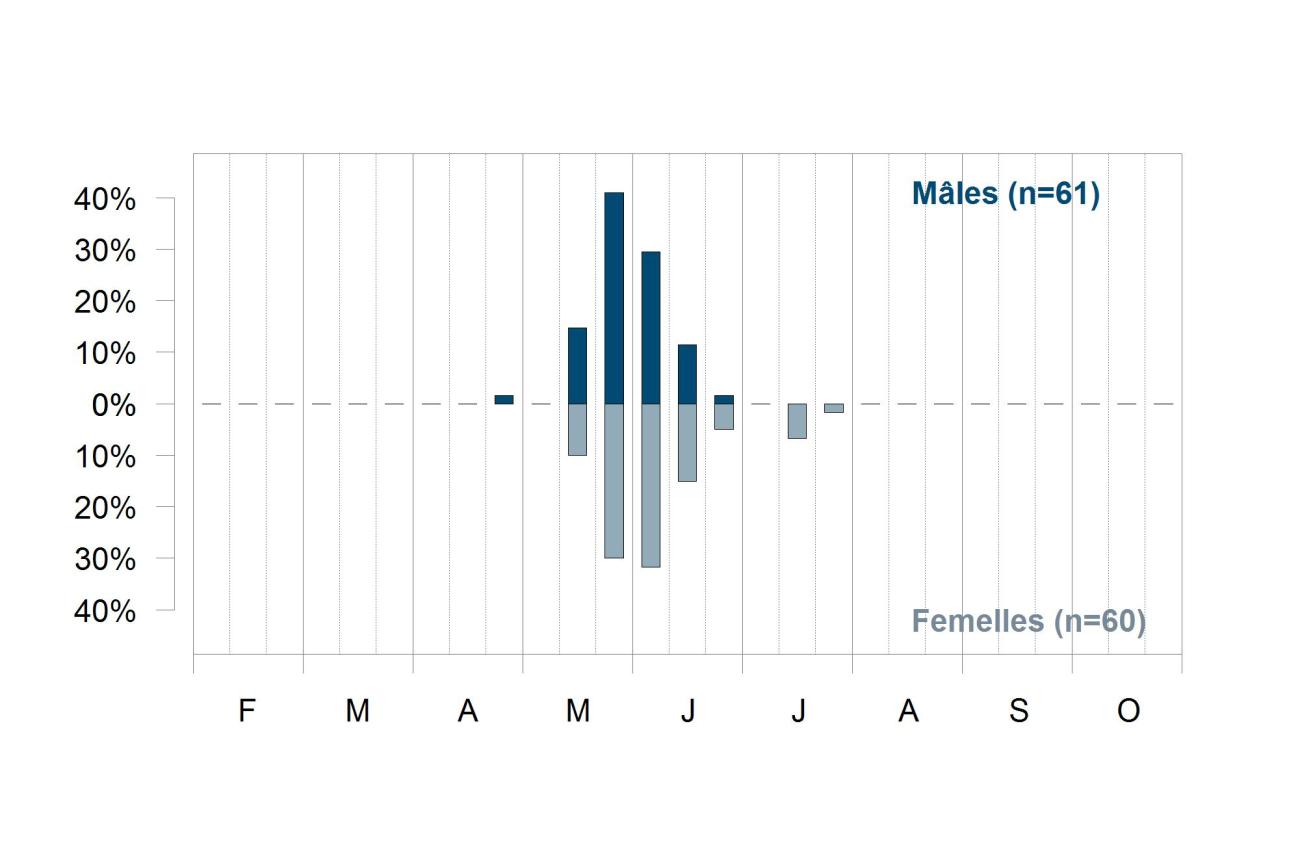
Phänologie von Andrena agilissima in der Schweiz.
Verbreitung
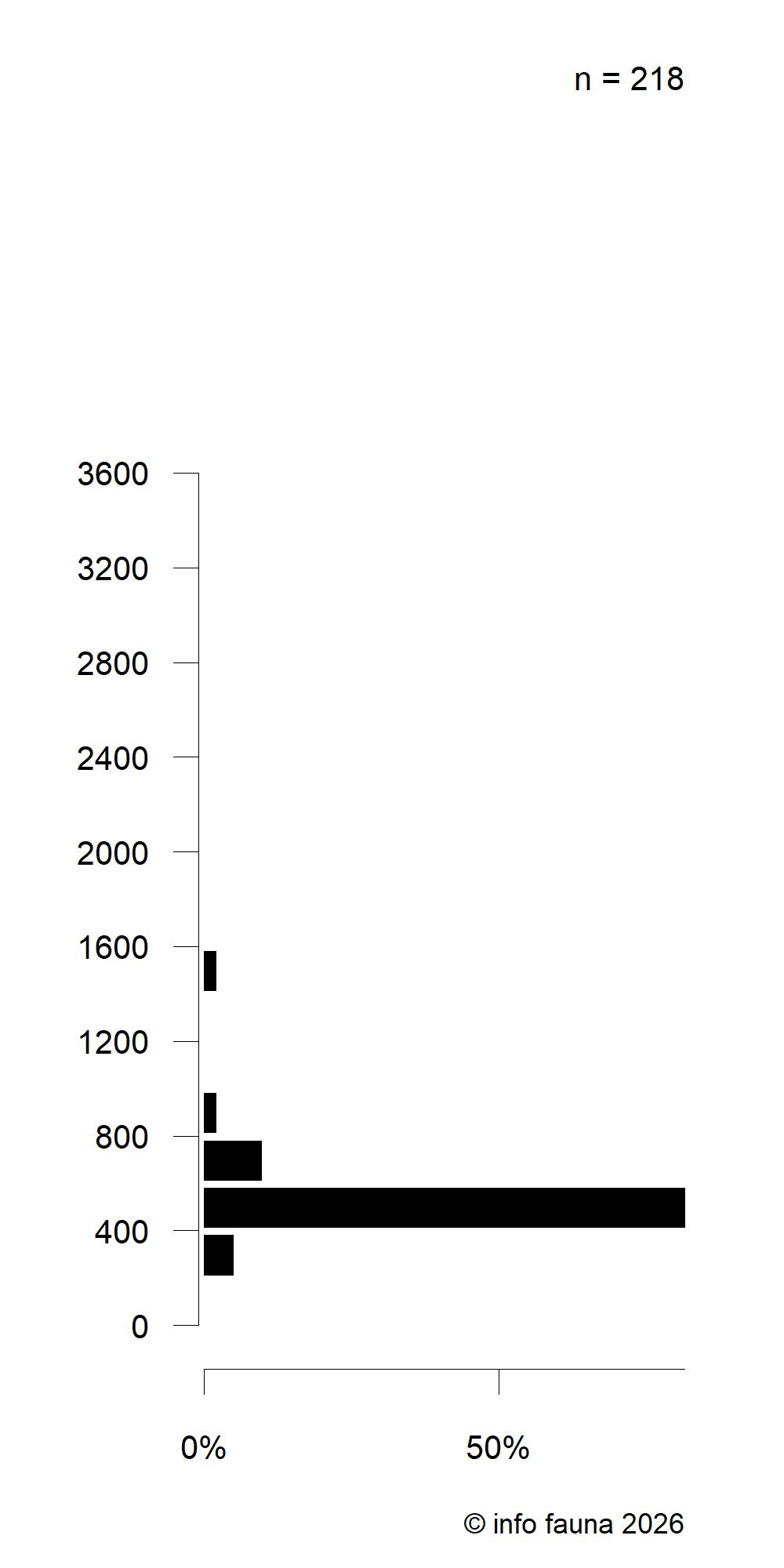
Der aktuelle Verbreitungsschwerpunkt von A. agilissima in der Schweiz ist die Nordschweiz mit dem Kanton Schaffhausen und dem Zürcher Hochrheingebiet und Weinland. Weiter ist die Art punktuell aus dem westlichen Mittelland entlang dem Jura und aus der Imboden Region im Graubünden bekannt. Die Art wurde früher auch im Walliser Rhonetal beobachtet. Die Alpennordflanke, die höheren Lagen des Jura sowie die Südalpentäler sind nicht besiedelt. Ausser ganz lokal in der Nordschweiz ist die Art heute äussert selten und nur einzeln zu beobachten, im Gegensatz zu früher. Es Handelt sich um eine Tieflandart, welche selten über 1000 m aufsteigt.

Höhenverteilung von Andrena agilissima in der Schweiz.
Conservation
Cette page n'a malheureusement pas été traduite dans la langue sélectionnée. Elle s'affiche dans la langue de l'auteur.
Bedrohungsstatus
Andrena agilissima wird in der Roten Liste als stark gefährdet (EN) eingestuft (Müller & Praz 2024) und ist eine national prioritäre Art (BAFU & InfoSpezies 2024). A. agilissima hat einen massiven Rückgang erlitten und weite Teile des Mittellandes geräumt, das früher wahrscheinlich flächendeckend besiedelt war. Die zahlreichen aktuellen Funde in der Nordschweiz täuschen darüber hinweg, dass die Art auch hier nur mehr in besorgniserregend geringer Dichte vorkommt und auch bei intensiver Suche stets nur in Einzeltieren angetroffen wird. Auch das fast vollständige Verschwinden der sich in den Nestern von A. agilissima entwickelnden Kuckucksbiene Nomada melathoracica aus der Schweiz illustriert die prekäre Bestandessituation von A. agilissima. Ausserhalb des Mittellandes gibt es zwei stark isolierte und individuenarme Vorkommen von A. agilissima in der Zentralschweiz und in Graubünden.
Nationale Priorität
- Dringlichkeit: 1 (dringend)
- Handlungsebene: Artenförderung
Wichtigste Fördergebiete
- Region Genf
- Churer Rheintal und Domleschg
- Jurasüdfuss
- nördliches Mittelland
Wichtigste Lebensraumansprüche
- grosses Angebot von im Frühling und Frühsommer blühenden, grossblütigen Brassicaceae, insbesondere von Sinapis arvensis und Barbarea vulgaris, aber auch Brassica spec., Eruca versicaria, Hesperis matronalis oder Raphanus raphanistrum
- Steilwände, Abbruchkanten und andere stark geneigte Erdaufschlüsse an gut besonnter Lage
- räumliche Nähe von Nahrungsräumen und Nistplätzen
- Höhenlage: meist unter 900 m Höhe
Wichtigste Gefährdungsursachen
- Fehlen eines ausreichenden Angebotes an grossblütigen Brassicaceae.
- Fehlen von Steilwänden, Abbruchkanten und steilen Böschungen mit vegetationslosen Bereichen
- zu grosse Distanzen zwischen guten Nahrungsräumen und geeigneten Nistplätzen
Wichtigste Erhaltungs- und Fördermassnahmen
- Förderung und Ansaat von grossblütigen Brassicaceae, insbesondere von Sinapis arvensis und Barbarea vulgaris auf nährstoffreicheren Ruderalflächen inner- und ausserhalb des Siedlungsgebietes, auf Buntbrachen, in Rebbergen oder entlang von Acker- und Wegrändern
- Erhaltung und Schaffung von Steilwänden, Abbruchkanten und steilen Böschungen mit offenen Bodenstellen an besonnter Lage
- Gewährleistung geringer Distanzen zwischen Nahrungsräumen und (potenziellen) Nistplätzen (Zielgrösse maximal 300 m)